


What's Happening?
As tensions rise in the Middle East due to the ongoing conflict involving the United States, Israel, and Iran, airlines and airports are facing significant challenges in maintaining safe and efficient operations. The conflict has led to the closure and restriction
of airspace across much of the region, forcing carriers to reroute flights, cancel services, and redesign network flows. This has resulted in aircraft being pushed into narrower corridors, reshaping transcontinental flight paths between Europe, Asia, and beyond. Airlines are prioritizing safety by continuously monitoring military developments and aviation advisories to avoid zones with active hostilities. Airports near conflict areas are expanding risk assessments to protect ground operations and passenger movements from potential impacts.
Why It's Important?
The disruption in air travel due to the Middle East conflict has significant implications for global aviation. Airlines are incurring increased costs due to longer flight routes, higher fuel consumption, and extended crew hours. The need for dynamic airspace management and coordination with air navigation service providers is critical to maintaining operational continuity. Additionally, the financial risk management aspect is crucial as insurers may reassess coverage or impose restrictions on operations in conflict zones. The situation underscores the importance of proactive preparation, real-time risk monitoring, and robust contingency plans to safeguard passengers, crew, and airline assets.
What's Next?
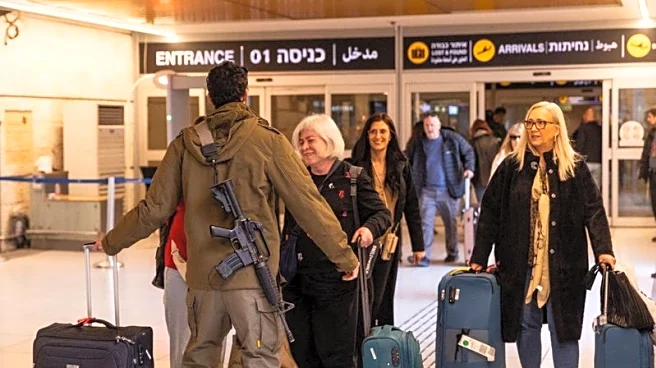
Airlines will continue to adapt to the evolving situation by exploring alternative routes and working closely with regulatory authorities to ensure safe passage through stable airspace. The industry may see increased collaboration with governments to organize evacuation or repatriation flights as commercial services remain constrained. The ongoing conflict may also prompt a reevaluation of insurance policies and asset protection strategies to mitigate financial risks associated with operating in volatile regions.