






What's Happening?
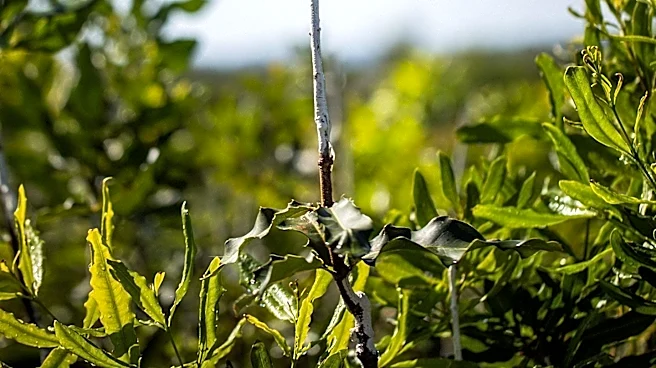
The pondberry, a federally endangered plant found in Missouri, faces a new threat from laurel wilt disease, a lethal fungus spread by a non-native beetle. The disease, which has already affected states bordering Missouri, poses a significant risk to the
pondberry and other members of the laurel family, such as spicebush and sassafras. Susan Farrington, a biologist with the Missouri Department of Conservation, highlighted the plant's existing struggles due to habitat loss and reproduction challenges. The Missouri Botanical Garden has been working to conserve the pondberry since 1985, aiming to reintroduce it to the wild. However, the spread of laurel wilt could devastate the plant's population and the broader ecosystem.
Why It's Important?
The potential spread of laurel wilt disease to Missouri underscores the vulnerability of endangered species to environmental threats. The loss of the pondberry could have unforeseen ecological consequences, as the plant may play an unknown role in its habitat. The situation highlights the broader issue of biodiversity loss and the need for conservation efforts to protect endangered species and their ecosystems. The threat also raises awareness about the impact of invasive species and diseases on native flora and fauna. Efforts to prevent the spread of laurel wilt, such as avoiding the movement of firewood across state lines, are crucial in mitigating the risk to Missouri's natural heritage.
What's Next?
Conservationists and biologists will continue monitoring the spread of laurel wilt disease and its potential impact on Missouri's ecosystems. The Missouri Botanical Garden and other organizations may intensify efforts to conserve and propagate the pondberry, exploring strategies to enhance its resilience against the disease. Public awareness campaigns could be launched to educate communities about the importance of preventing the spread of invasive species. Additionally, research into potential treatments or resistance to laurel wilt may be pursued to protect the laurel family and other affected plants. Collaboration between state agencies, conservation groups, and the public will be essential in addressing this environmental challenge.