





What's Happening?
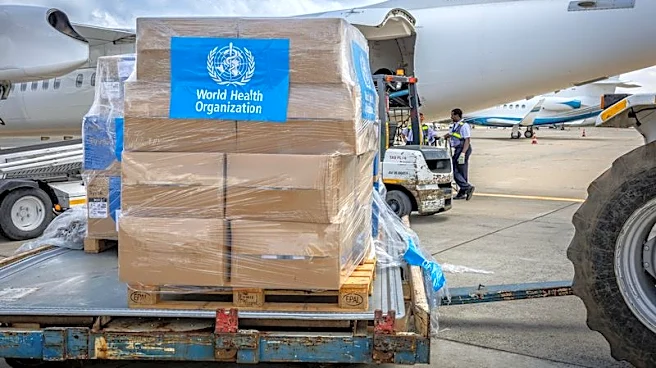
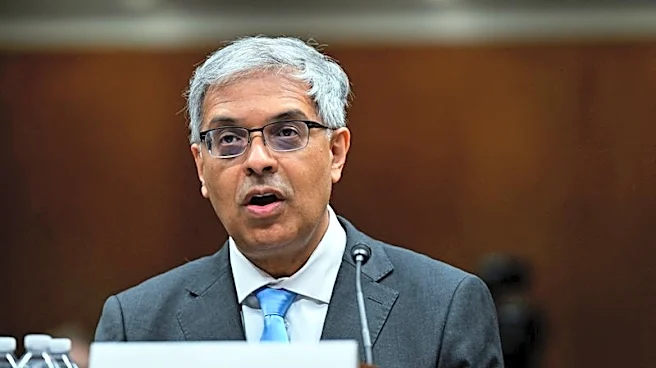
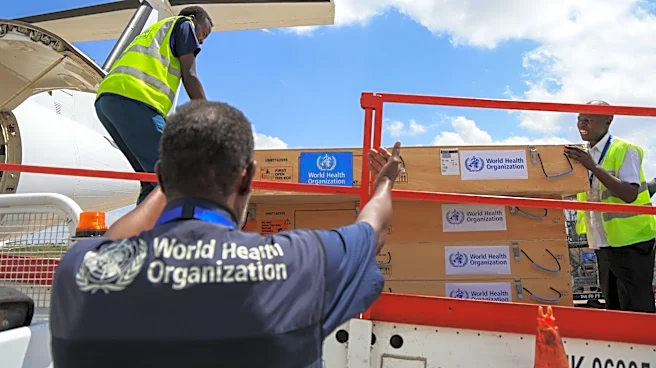
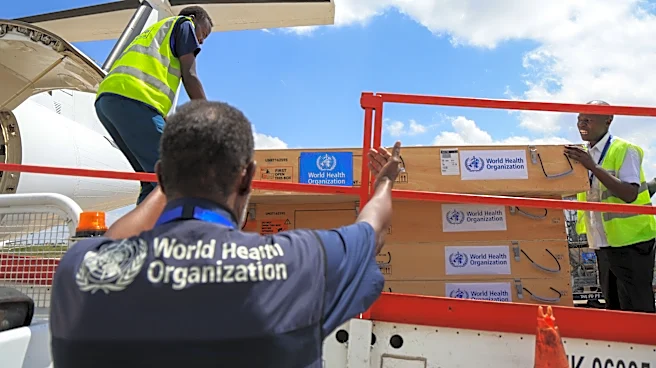
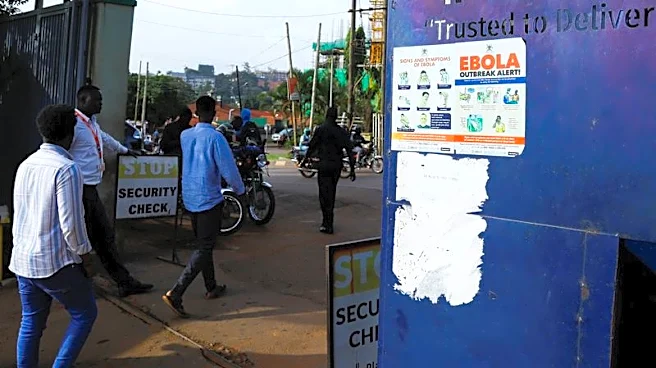
The World Health Organization (WHO) head, Tedros Adhanom Ghebreyesus, has arrived in the Democratic Republic of the Congo (DRC) to address the ongoing Ebola outbreak. Since the outbreak was declared on May 15, 2026, there have been 10 confirmed and 223
suspected Ebola deaths. The epidemic is centered in Ituri province, a region complicated by conflict and displacement. Tedros emphasized that the outbreak can be stopped and called for a ceasefire among warring parties to facilitate medical relief efforts. The WHO is not supporting travel bans, as they are deemed ineffective. Neighboring Uganda has closed its border with the DRC, while the U.S. plans to deny entry to infected individuals and is working on establishing a treatment facility in Kenya.
Why It's Important?
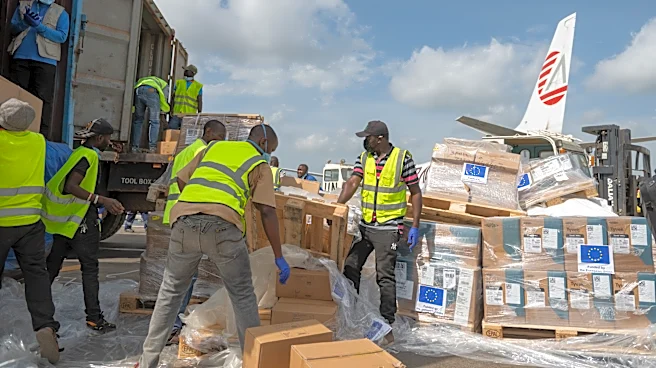
The Ebola outbreak in the DRC poses significant challenges due to the region's ongoing conflict, which hampers medical relief efforts. The situation highlights the need for international cooperation and effective health strategies to prevent the spread of the virus. The WHO's involvement underscores the global health community's commitment to addressing such epidemics. The outbreak's impact extends beyond health, affecting regional stability and international relations, as neighboring countries take measures to protect their populations. The U.S. response, including plans for a treatment facility, reflects the broader implications for global health security and the importance of preparedness in handling infectious diseases.
What's Next?
The WHO is focusing on clinical trials for vaccines and treatments for the Bundibugyo strain of Ebola. The African Union's health agency anticipates a vaccine by the end of the year. The international community, including the U.S., is likely to continue monitoring the situation closely, with potential diplomatic and humanitarian efforts to support affected regions. The call for a ceasefire in conflict zones may lead to negotiations aimed at facilitating health interventions. The success of these efforts will depend on cooperation among local governments, international organizations, and health agencies.