



What's Happening?
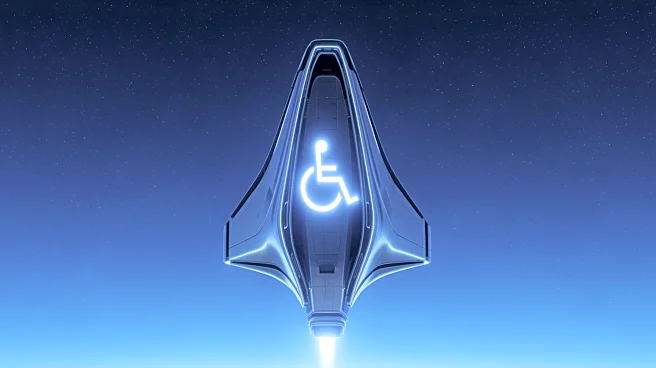
Michaela Benthaus, a paraplegic engineer from Germany, has become the first wheelchair user to travel to space. She participated in a private mission organized by Blue Origin, the space tourism company founded by Jeff Bezos. Benthaus, who suffered a spinal
cord injury in a mountain bike accident seven years ago, was accompanied by five other passengers, including Hans Koenigsmann, a retired SpaceX executive who helped arrange the flight. The mission involved a 10-minute suborbital flight that reached an altitude of over 65 miles, allowing Benthaus to experience weightlessness and view Earth from space. Blue Origin made minor adjustments to accommodate Benthaus, such as adding a patient transfer board and providing immediate access to her wheelchair upon landing.
Why It's Important?
This mission represents a significant step forward in making space travel accessible to individuals with disabilities. Benthaus's journey demonstrates that space is not limited to able-bodied individuals, challenging traditional perceptions of who can be an astronaut. The mission highlights the potential for increased inclusivity in space tourism, encouraging other companies to consider accessibility in their designs. Benthaus's experience may inspire further advancements in making both space and Earth more accessible for people with disabilities, potentially influencing public policy and societal attitudes towards inclusivity.
What's Next?
Benthaus's successful flight may pave the way for more individuals with disabilities to participate in space missions. Blue Origin and other space tourism companies might continue to innovate and adapt their technology to accommodate a wider range of passengers. Benthaus hopes her journey will inspire others and lead to improved accessibility on Earth. The mission could also prompt discussions among policymakers and industry leaders about the importance of inclusivity in space exploration.
Beyond the Headlines
Benthaus's flight underscores the ethical imperative of inclusivity in technological advancements. It challenges societal norms and encourages a reevaluation of accessibility standards in various industries. The mission may also influence cultural perceptions of disability, promoting a narrative that emphasizes capability and potential rather than limitations. As space tourism becomes more prevalent, the inclusion of diverse participants could lead to broader societal shifts in how disability is perceived and accommodated.