







What's Happening?
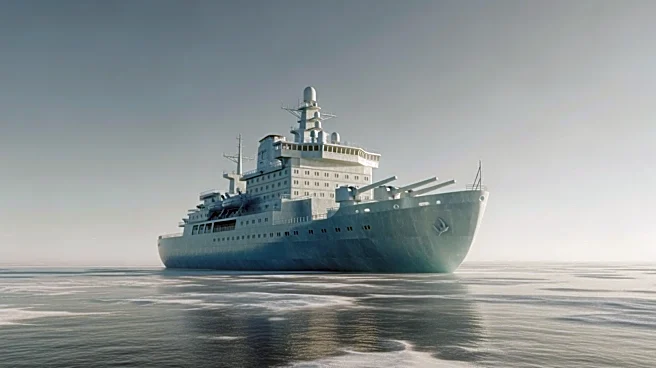
Japan's Maritime Self Defense Force plans to cease operating the Antarctic research vessel Shirase due to military personnel shortages. The navy will gradually withdraw, leaving only a support unit for ice navigation duties. The operations of the successor
vessel will be managed by civilian agencies, with the Japan Agency for Marine-Earth Science and Technology as a potential candidate. This transition is informed by advances in navigation technology, reducing risks in polar regions. The move allows Japan to focus its military resources on core defense duties amid concerns of shrinking personnel numbers.
Why It's Important?
The shift from military to civilian operation of Japan's Antarctic icebreaker reflects broader geopolitical and environmental changes. As navigation technology advances, civilian-led missions become more feasible, allowing Japan to reallocate military resources to address personnel shortages and expand defense commitments. This transition also highlights the increasing role of civilian agencies in scientific research, potentially leading to more flexible and innovative approaches to Antarctic exploration and environmental studies.
What's Next?
Japan's Ministry of Education, Science and Culture will develop a transport framework for future Antarctic expeditions, ensuring continued research and exploration. The transition to civilian operation may lead to new collaborations and partnerships in scientific research, enhancing Japan's contributions to global understanding of polar environments. The military's focus on core defense duties may also influence Japan's strategic priorities in the region.