






What's Happening?
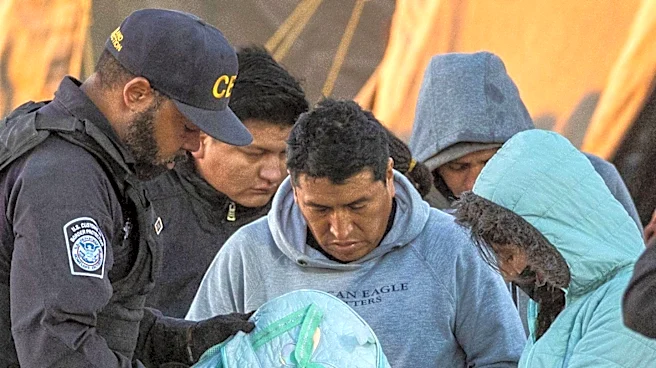
U.S. Customs and Border Protection (CBP) has completed the expansion of its Simplified Arrival program, implementing facial recognition technology at all international airports across the United States by June 2022. This system compares a live photo of travelers
with existing passport or visa photos to verify identity. The program, which began trials in 2018, has processed over 171 million travelers by June 2022. CBP reports that this technology has successfully identified and stopped over 1,450 impostors attempting to use legitimate travel documents belonging to other individuals. For U.S. citizens, new photos captured by the system are deleted within 12 hours, while data retention policies for international visitors remain a point of discussion among privacy advocates.
Why It's Important?
The widespread implementation of biometric facial recognition by CBP signifies a major shift in U.S. border security and travel procedures. This technology aims to enhance national security by more effectively identifying individuals attempting to enter the country fraudulently, thereby reducing the risk of terrorism and other illicit activities. For travelers, it promises a more streamlined and efficient entry process, potentially reducing wait times and improving the overall travel experience. However, the expansion also raises significant privacy concerns, particularly regarding the storage and use of biometric data for non-U.S. citizens. The balance between security enhancements and individual privacy rights will continue to be a critical debate, influencing public trust and future policy decisions regarding biometric applications in the U.S.
What's Next?
The continued operation and potential refinement of the Simplified Arrival program will likely involve ongoing evaluations of its effectiveness and privacy implications. Discussions between government agencies, privacy advocacy groups, and technology providers are expected to address concerns about data retention, security protocols, and the potential for misuse of biometric information. Future developments may include the integration of this technology with other identity verification systems or its expansion to additional points of entry beyond airports. The success and public acceptance of this program could also influence the adoption of similar biometric solutions in other sectors within the U.S., such as national ID systems or other government services.
Beyond the Headlines
The deployment of facial recognition at U.S. airports reflects a broader global trend towards integrating biometrics into everyday life, blurring the lines between convenience and surveillance. While proponents emphasize enhanced security and efficiency, critics highlight the potential for mission creep, data breaches, and the erosion of civil liberties. The 'least risky' biometric examples, such as phone unlocking where data remains on the device, contrast sharply with large-scale identification systems that rely on central databases. The ongoing debate surrounding CBP's program underscores fundamental questions about who controls personal biometric data, how it is protected, and the societal implications of a future where identity verification is increasingly automated and pervasive. This technological shift could redefine public expectations of privacy and security in the digital age.