

What's Happening?
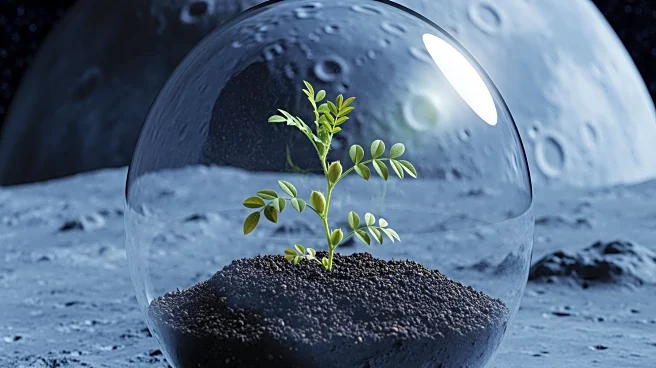
Scientists have made a significant advancement in extraterrestrial farming by successfully cultivating chickpeas using simulated lunar soil. This development is a crucial step towards achieving self-sustaining food production on the moon, which is essential
for the viability of long-term lunar missions. The ability to grow food on the moon could reduce the need for supply missions from Earth, making lunar bases more sustainable and cost-effective. This breakthrough is part of broader efforts to develop technologies that support human life in space, particularly as space agencies and private companies plan for extended missions and potential colonization of the moon.
Why It's Important?
The successful cultivation of chickpeas on simulated lunar soil represents a major milestone in space exploration and agriculture. It addresses one of the critical challenges of long-term space missions: food sustainability. By enabling food production on the moon, this technology could significantly reduce the logistical and financial burdens of transporting food from Earth. This advancement also has implications for national security and commercial space infrastructure, as evidenced by the increased investment in space technology companies like Sierra Space. The company's recent $550 million funding round, which raised its valuation to $8 billion, underscores the growing interest in space technology driven by geopolitical tensions and the strategic importance of space exploration.
What's Next?
The next steps following this breakthrough in lunar agriculture will likely involve further testing and refinement of the technology to ensure its viability in actual lunar conditions. Scientists and engineers will need to address challenges such as the moon's harsh environment, including temperature extremes and radiation. Additionally, collaboration between government space agencies and private companies will be crucial to integrate this technology into future lunar missions. As interest in lunar exploration grows, particularly with NASA's Artemis program and other international efforts, the development of sustainable life-support systems will be a key focus area.
Beyond the Headlines
This development in lunar agriculture could have broader implications beyond space exploration. The techniques and technologies developed for growing food in space could be adapted for use in extreme environments on Earth, such as deserts or areas affected by climate change. Furthermore, the success of such projects could inspire further investment in space exploration and technology, potentially leading to new industries and economic opportunities. The ethical and cultural dimensions of space colonization, including the potential impact on lunar ecosystems and the governance of extraterrestrial resources, will also need to be considered as these technologies advance.