

What's Happening?
The Schuylkill River Passenger Rail Authority (SRPRA) has reached an agreement with Amtrak to operate future passenger rail service between Reading, Pottstown, Phoenixville, and Philadelphia. This development marks a significant step towards restoring
rail service along the Schuylkill River corridor, which has been absent for over four decades since SEPTA discontinued service to Reading in 1981 due to financial strain and declining ridership. The proposed service aims to connect Berks, Chester, and Montgomery counties, addressing the growing transportation needs in these areas. Past attempts to revive the line, such as the Schuylkill Valley Metro in the early 2000s, were deemed too ambitious and costly. However, the current plan benefits from federal support, with the Federal Railroad Administration (FRA) selecting SRPRA as one of 69 national rail corridors to receive grant funding for planning and development. SRPRA is considered by the FRA to be among a smaller group of about 40 projects 'ready for prime time' due to its relative ease of implementation, lower cost, and high probability of success in terms of ridership.
Why It's Important?
The restoration of passenger rail service along the Schuylkill River corridor holds significant importance for regional development and connectivity. The absence of rail service has contributed to increased road congestion in rapidly growing communities like Phoenixville, where new housing units have led to significant traffic challenges. This project offers a sustainable alternative to car reliance, potentially alleviating traffic and improving the quality of life for residents. Economically, the service is expected to generate substantial benefits throughout the region by facilitating easier access to employment, education, and recreational opportunities in Philadelphia and surrounding areas. The project also represents a broader federal push to invest in intercity rail travel, recognizing the evolving demand for flexible transportation options beyond traditional 9-to-5 commutes, especially in a post-COVID world where remote work has altered commuting patterns. The use of existing freight corridors and high-quality infrastructure, much of which is already equipped with Positive Train Control, makes this a cost-effective and efficient undertaking.
What's Next?
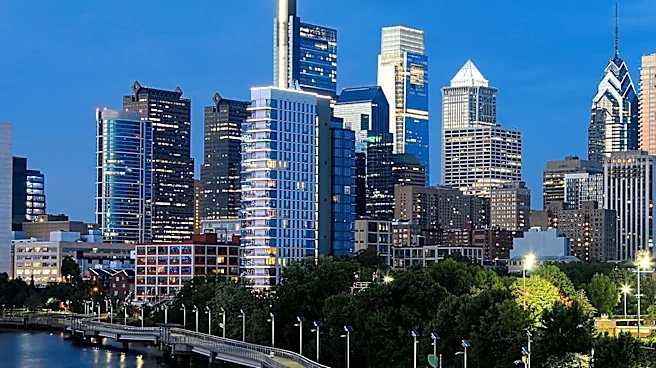
The most optimistic timeline suggests that passenger service could be introduced as early as 2030, with trains running between Reading's Franklin Street Station, the dormant stations in Pottstown and Phoenixville, and Philadelphia's 30th Street Station. While local funding will be required for station renovations, the federal government is expected to subsidize most of the rail infrastructure costs, estimated at around $100 million for the rail component. Amtrak is currently developing estimates for ridership and other variables, with a report expected later this year. SRPRA anticipates relying on a combination of federal, state, and county operating subsidies until the service matures and reaches forecasted ridership levels, potentially mirroring Amtrak's Keystone Service model. Key details, such as track arrangements with Norfolk Southern and potentially CSX, still need to be finalized. The project's overall timeline is also contingent on the delivery of Amtrak's new Airo trains from Siemens, which are currently in testing and could be introduced to passenger service in the Pacific Northwest later this year. These dual-powered trains offer flexibility for both electrified and non-electrified territories.
Beyond the Headlines
Beyond the immediate benefits of reduced traffic and economic stimulation, the Schuylkill River passenger rail project signifies a broader shift in transportation policy and urban planning. It highlights a renewed federal commitment to intercity rail as a vital component of a sustainable and resilient transportation network, especially in areas experiencing population growth and increased demand for connectivity. The project also underscores the potential for repurposing existing infrastructure, such as freight rail lines, for passenger use, offering a more environmentally friendly and efficient alternative to building new roadways. Furthermore, the initiative could serve as a model for other regions looking to revitalize their public transit systems, demonstrating how strategic partnerships between regional authorities and national rail operators, coupled with federal support, can overcome historical challenges and bring long-dormant services back to life. The long-term vision includes linking and blending this service with other Amtrak lines, potentially extending travel options to destinations like New York and Washington, D.C., thereby integrating the region more deeply into the broader Northeast Corridor.