



What's Happening?
The University of Copenhagen's Department of Veterinary and Animal Sciences is offering a PhD fellowship in Medical Entomology. This three-year, full-time position, set to begin on January 1, 2027, or by agreement, focuses on enhancing surveillance strategies
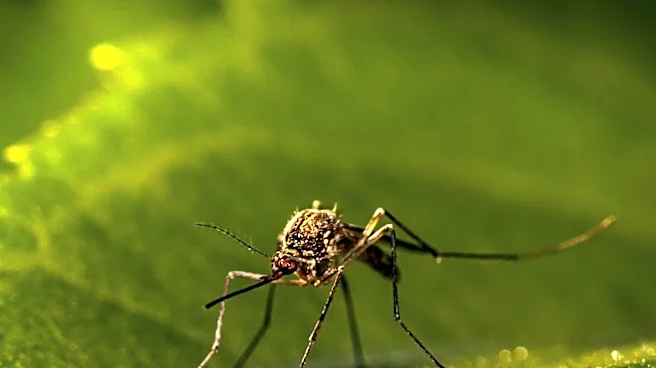
for mosquito-borne infections that impact both human and animal health. The successful candidate will join the Vector Group at the Frederiksberg Campus, a team responsible for national vector surveillance and providing scientific advice on vector-borne disease risks to national authorities. The project integrates medical entomology, vector surveillance, veterinary disease control, epidemiology, disease modeling, and quantitative data analysis. Key objectives include improving mosquito surveillance techniques, extracting new epidemiological insights from surveillance data, predicting the distribution of emerging mosquito species like Culex modestus in the Nordic region, and developing a web-based national vector surveillance dashboard. The PhD researcher will also participate in EU-funded surveillance and research projects, including those focused on West Nile virus and arbovirus control.
Why It's Important?
This fellowship is significant for public health and veterinary medicine, particularly in the context of emerging infectious diseases. By focusing on improved surveillance and predictive modeling of mosquito-borne pathogens, the research aims to bolster early detection and response mechanisms. The development of a national vector surveillance dashboard will provide critical information to veterinary and health authorities, farmers, and the general public, facilitating informed decision-making and risk assessment. The project's emphasis on understanding mosquito population dynamics and the spread of species like Culex modestus directly addresses the challenges posed by climate change and globalization, which can alter vector distributions and disease patterns. The collaboration with Nordic partners and participation in EU-funded projects highlight the international relevance of this research in combating cross-border health threats and establishing robust, data-driven disease prevention strategies.
What's Next?
The application deadline for the PhD fellowship is August 30, 2026, with interviews expected in weeks 40 and 41 of 2026. The selected candidate will commence their research on January 1, 2027, or as agreed. Over the three-year period, the PhD student will conduct an independent research project under senior supervision, participate in approximately 30 ECTS of PhD courses, and engage in active research environments, including a research stay with another team. The project will involve fieldwork, data analysis, and the development of the national vector surveillance dashboard. The researcher will also contribute to EU-funded projects, potentially taking responsibility for specific activities such as data reporting to EFSA and the EU, and preparing scientific publications. The ultimate goal is the completion of a PhD thesis based on the research, with findings expected to inform national and international strategies for vector-borne disease control.
Beyond the Headlines
The initiative underscores a growing recognition of the interconnectedness of environmental changes, vector ecology, and public health. The focus on 'One Health' principles, integrating human, animal, and environmental health, is crucial in addressing complex challenges like mosquito-borne diseases. The project's emphasis on data-driven surveillance and predictive modeling reflects a broader shift towards proactive rather than reactive public health interventions. The development of a public-facing dashboard also highlights the importance of knowledge transfer and communication in empowering stakeholders beyond the scientific community to understand and mitigate disease risks. This research could set a precedent for how countries approach vector surveillance, potentially influencing policy and resource allocation for disease prevention in other regions facing similar threats from climate-sensitive pathogens.