
What's Happening?
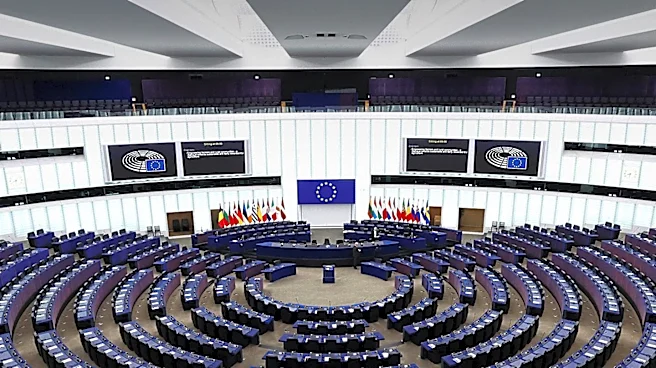
The European Union has announced a significant increase in financial support for the Djibouti Armed Forces, doubling its allocation from 10 million to 20 million euros through the European Peace Facility.
This enhanced funding aims to bolster Djibouti's capabilities, particularly its Navy, to maintain a more effective presence in the waters off Bab el-Mandeb, a critical chokepoint between the Red Sea and the Indian Ocean. This decision reflects a strengthening partnership in security and defense and is part of the broader European response to the deteriorating security situation in the Red Sea and surrounding areas. The increased resources are intended to safeguard freedom of navigation and support the EU's naval operations, such as Eunavfor Aspides, which protects merchant shipping in the region. The funding will focus on developing and maintaining assets, enhancing Maritime Domain Awareness, and increasing sea presence.
Why It's Important?
This increased EU support for Djibouti is crucial for several reasons. The Red Sea is a vital global trade route, and the ongoing security threats, particularly from Houthi attacks on international shipping, have significantly disrupted maritime commerce. By strengthening Djibouti's naval capabilities, the EU aims to enhance local capacity to complement its own naval operations, thereby contributing to regional stability and the protection of merchant vessels. This move underscores the EU's commitment to ensuring freedom of navigation in a strategically important waterway. The investment also highlights the growing recognition of the need for international cooperation to address complex security challenges that have far-reaching economic implications, including potential impacts on global supply chains and energy prices. The stability of this region directly affects U.S. economic interests and global trade flows.
What's Next?
The doubled funding is expected to lead to a more robust presence of the Djibouti Navy in the Bab el-Mandeb Strait, potentially improving maritime security and surveillance in the area. This will likely involve the acquisition and maintenance of additional maritime assets, enhanced training for personnel, and improved intelligence, surveillance, and reconnaissance (ISR) capabilities. The EU's continued engagement and increased investment suggest a sustained effort to counter threats to shipping and maintain stability in the Red Sea. Further collaboration between the EU and regional partners, including the U.S., could be anticipated as they work to address the complex security landscape. The effectiveness of this increased support will be closely monitored as the international community seeks to mitigate the risks to global maritime trade.
Beyond the Headlines
The EU's decision to significantly increase aid to Djibouti extends beyond immediate security concerns, reflecting a deeper strategic imperative to foster resilience among coastal partners along critical trade routes. This initiative could set a precedent for how international bodies engage with local forces to address global security challenges, emphasizing capacity building and shared responsibility. The long-term implications include potentially shifting regional power dynamics as Djibouti's strategic importance grows, and it becomes a more capable actor in maritime security. This approach also highlights the interconnectedness of global security and economic stability, where localized conflicts can have ripple effects on international trade and geopolitical relations. The ethical dimension involves ensuring that the increased military aid is used transparently and effectively to promote peace and security, without contributing to regional militarization or human rights concerns.