



What's Happening?
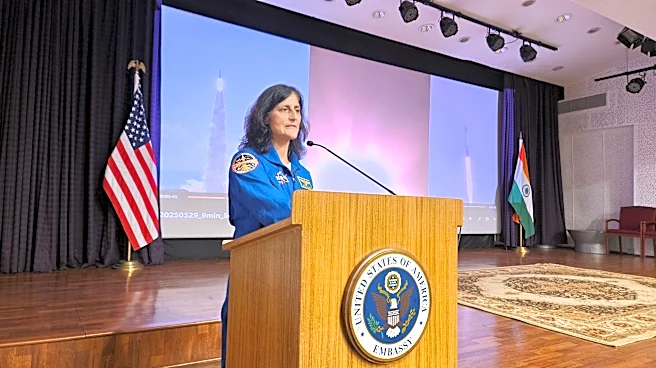
Dr. Ruth Angus, an astronomer and associate curator and professor of astrophysics at the American Museum of Natural History, addressed various questions about exoplanets. She explained that exoplanets are planets outside our solar system orbiting other
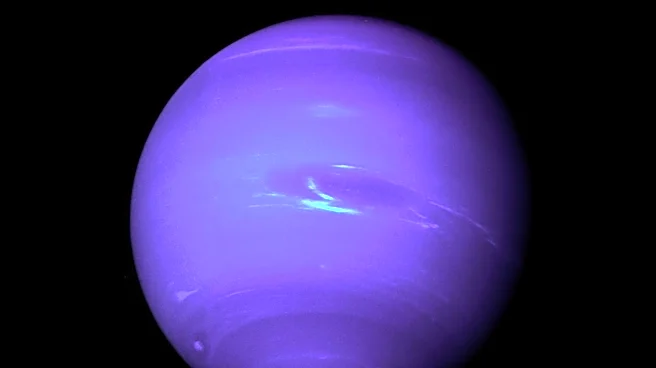
stars, with over 6,000 discovered so far. Dr. Angus detailed methods for detecting exoplanets, primarily the transit method, where a planet passes in front of its star causing a dimming of light, and the radial velocity method, which observes the star's wobble due to a planet's gravitational pull. She clarified that super-Earths are planets slightly more massive than Earth and discussed the hypothesis of a 'Planet Nine' beyond Neptune. The astronomer also confirmed the possibility of planets orbiting two suns, known as circumbinary planets, citing Kepler-16b as an example. She touched upon extreme exoplanets, including those as hot as stars, those with eccentric orbits causing extreme temperature swings, and planets that are disintegrating.
Why It's Important?
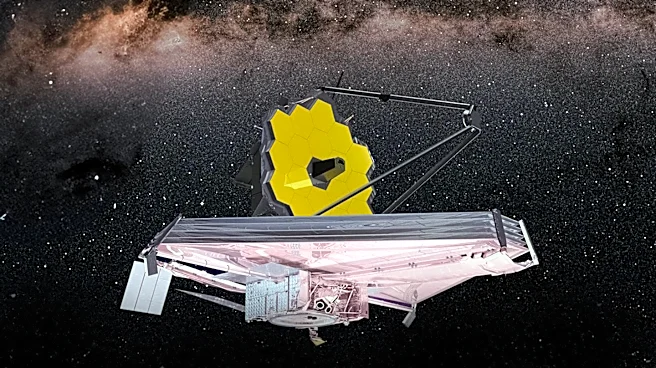
The ongoing discovery and study of exoplanets are crucial for understanding the prevalence of planetary systems beyond our own and the conditions necessary for life. Dr. Angus's explanations highlight the scientific methods and technological advancements that enable these discoveries, such as the James Webb Space Telescope's role in searching for atmospheres on habitable-zone exoplanets. Understanding what makes Earth livable—including liquid water, a strong magnetic field, an atmosphere, plate tectonics, and a large moon—provides a framework for assessing the habitability of other planets. The search for biosignatures like methane and oxygen in combination is vital for identifying potential life beyond Earth, which could profoundly impact humanity's understanding of its place in the universe. The discussion also underscores the challenges in identifying truly habitable planets, as even those in the 'habitable zone' may face issues like intense stellar radiation from their host stars.
What's Next?
Future research will continue to focus on identifying and characterizing exoplanets, particularly those within habitable zones. The James Webb Space Telescope will play a critical role in analyzing the atmospheres of these planets for signs of water and potential biosignature gases. Scientists will also continue to refine detection methods to distinguish true exoplanets from stellar phenomena like starspots. The search for exomoons, which could also harbor life, is another area of ongoing exploration. As technology advances, the ability to directly image exoplanets and analyze their compositions will improve, offering more detailed insights into their potential for supporting life. The SETI program will persist in its search for technosignatures, expanding its coverage of stars and planetary systems to detect any signs of extraterrestrial intelligence.
Beyond the Headlines
The exploration of exoplanets extends beyond mere scientific discovery; it touches upon profound philosophical and existential questions. The possibility of life elsewhere in the universe challenges anthropocentric views and could reshape humanity's understanding of its uniqueness. The concept of 'rogue planets'—planets without a host star—adds another layer of complexity to planetary dynamics and the potential for life in unexpected environments. The discussion of Earth's unique characteristics for habitability emphasizes the delicate balance of factors required for life to thrive, highlighting the importance of planetary protection and environmental stewardship on our own world. The ongoing search for exoplanets and extraterrestrial life also fuels public imagination, inspiring future generations in scientific pursuits and fostering a broader perspective on cosmic existence.