
What's Happening?
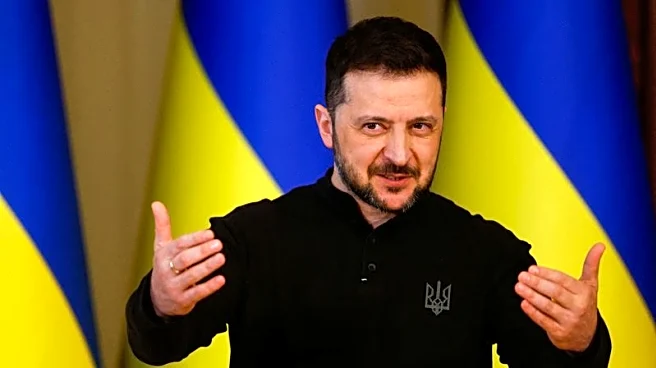
Ukrainian President Volodymyr Zelensky has indicated a potential shift in Ukraine's stance regarding its NATO membership aspirations. In a recent statement, Zelensky suggested that Ukraine might be willing to forgo its bid to join NATO in exchange for alternative
security guarantees from the United States and other allies. This development comes as Ukraine prepares for further discussions with U.S. envoys in Berlin. Zelensky emphasized the importance of bilateral security guarantees, akin to NATO's Article 5, from the U.S., as well as support from European countries, Canada, and Japan. The Ukrainian leader expressed dissatisfaction with the current negotiation dynamics, which he perceives as being driven by power rather than fairness. He highlighted the need for a cease-fire as a central component of the upcoming talks, while also expressing concern about the lack of accountability for Russia's actions in Ukraine.
Why It's Important?
This potential concession by Ukraine could significantly alter the geopolitical landscape in Eastern Europe. By stepping back from its NATO ambitions, Ukraine may secure immediate security assurances, potentially leading to a de-escalation of the ongoing conflict with Russia. However, this move could also set a precedent for how international security agreements are negotiated under duress, potentially impacting future conflicts. The decision may influence U.S. foreign policy, as it seeks to balance its support for Ukraine with broader strategic interests in the region. Additionally, the outcome of these negotiations could affect European security dynamics, as countries reassess their defense commitments and alliances in response to shifting power structures.
What's Next?
As negotiations continue, the focus will likely be on finalizing the terms of any security guarantees and addressing territorial disputes, particularly concerning the Donbas region. The involvement of U.S. Special Envoy Steve Witkoff and other American and European officials underscores the international dimension of these talks. The outcome will depend on the willingness of all parties to compromise and the ability to enforce any agreements reached. The potential for a cease-fire and the establishment of a demilitarized zone in contested areas could pave the way for a more stable peace, though challenges remain in ensuring compliance and addressing the humanitarian impact of the conflict.
Beyond the Headlines
The ethical implications of negotiating under military pressure raise questions about the principles of international law and sovereignty. Ukraine's potential concession highlights the complex interplay between national security and international diplomacy, where smaller nations may be compelled to make significant sacrifices to achieve peace. The situation also underscores the importance of holding aggressor states accountable for violations of international norms, as failure to do so could embolden similar actions elsewhere. The long-term impact on Ukraine's political landscape and its relationship with Western allies will depend on the perceived fairness and effectiveness of the negotiated outcomes.