



What's Happening?
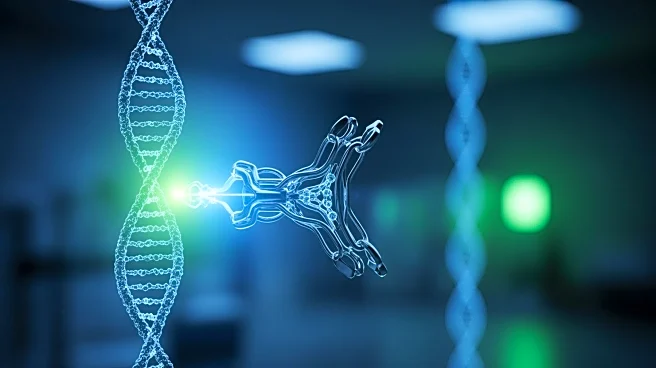
A recent study has demonstrated the potential of the CRISPR-Cas13a system in reversing carbapenem-resistant Pseudomonas aeruginosa by targeting the blaIMP-1 gene. This innovative approach utilizes a non-replicative phage capsid loaded with CRISPR-Cas13a,
which specifically targets and inhibits the growth of the resistant bacterial strain. The engineered product, AB-Capsid_cas13aPA_blaIMP-1, was validated through a transduction assay, confirming its efficient delivery and bactericidal effects. The study highlights the specificity of the CRISPR-Cas13a system, as growth inhibition was observed only when blaIMP-1 expression was induced, showcasing its targeted action against the resistant strain.
Why It's Important?
The development of this CRISPR-Cas13a system represents a significant advancement in combating antibiotic-resistant bacteria, a growing public health concern. Carbapenem-resistant Pseudomonas aeruginosa is particularly challenging to treat due to its resistance to multiple antibiotics, leading to limited treatment options and increased mortality rates. By providing a targeted approach to inhibit bacterial growth, this technology could revolutionize the treatment of resistant infections, potentially reducing the reliance on traditional antibiotics and mitigating the spread of resistance. This innovation could have far-reaching implications for healthcare, offering a new tool in the fight against antibiotic resistance.
What's Next?
Further research and development are needed to refine this CRISPR-Cas13a system for clinical applications. Future studies will likely focus on optimizing the delivery mechanisms and assessing the safety and efficacy of this approach in vivo. Regulatory approval processes will also be a critical step before this technology can be widely implemented in clinical settings. Additionally, the potential for this system to be adapted for other resistant bacterial strains could be explored, broadening its applicability and impact on public health.