






What's Happening?
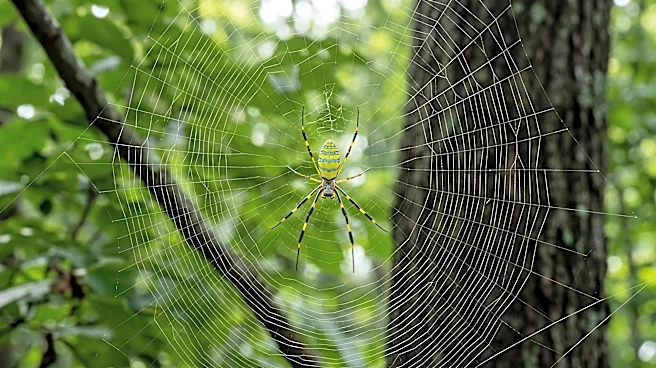
Large, invasive Joro spiders, native to East Asia, are once again spreading across several states in the southeastern U.S., including Georgia, the Carolinas, Tennessee, and Alabama. First spotted in Georgia in 2014, these spiders are characterized by
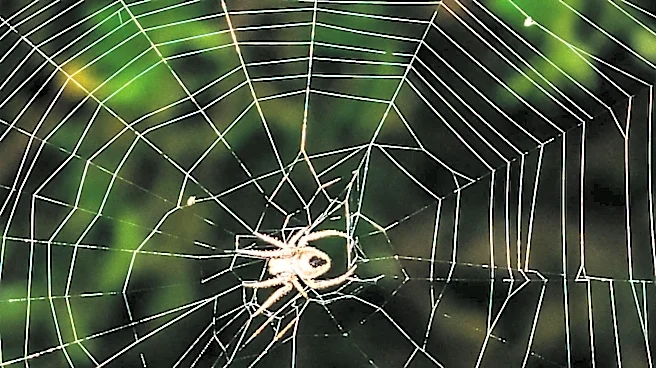
their yellow bodies with bluish-green stripes and black and yellow legs, with adult females reaching up to 1 inch in body length and a 4-inch leg span. Despite their intimidating appearance and ability to create massive webs up to 10 feet in diameter, researchers emphasize that Joro spiders are largely harmless to humans and are unlikely to bite unless forcibly restrained. Only young spiders are capable of "ballooning," a method of long-distance travel using silk caught by the wind. The Great Smoky Mountains National Park has asked visitors to report sightings through the iNaturalist app or email, but specifically advises against disturbing the spiders, citing both park regulations and ongoing research needs.
Why It's Important?
The continued spread of Joro spiders is important for understanding invasive species dynamics and their potential ecological impacts in the U.S. While currently deemed harmless to humans, the presence of a new large, non-native species can disrupt local ecosystems, even if the full extent of this impact is not yet understood. The call from researchers to report sightings but not disturb the spiders highlights the critical role of citizen science in tracking invasive species and the need for careful, evidence-based approaches to managing them. This situation also educates the public on how to interact with wildlife, particularly invasive species, emphasizing that not all non-native organisms require immediate eradication. The research being conducted on their impact on native orb-weaver populations is crucial for developing informed conservation strategies and understanding broader ecological shifts.
What's Next?
Researchers, particularly those at the University of Tennessee, will continue to map the spread of Joro spiders using public sightings reported through platforms like iNaturalist. Ongoing studies will focus on understanding the ecological impact of these spiders, especially their interactions with native orb-weaver populations. The advice to not disturb the spiders will likely remain in effect as more data is collected to determine their long-term effects on the ecosystem. Public awareness campaigns may continue to educate residents in affected states about Joro spiders, distinguishing them from native species and providing guidelines for reporting sightings without causing harm. The scientific community will aim to determine if any intervention is necessary in the future, based on comprehensive ecological assessments.
Beyond the Headlines
The Joro spider phenomenon extends beyond a simple invasive species story, touching on broader themes of globalization, ecological resilience, and human interaction with the natural world. The rapid spread of an Asian species across the U.S. Southeast underscores how interconnected global ecosystems are and the challenges of preventing the introduction of non-native organisms. The public's reaction, often driven by fear due to the spiders' size, highlights the need for scientific communication to counter misinformation and promote rational responses to ecological changes. Furthermore, the research into their impact on native species raises ethical questions about conservation priorities and the balance between protecting native biodiversity and adapting to new ecological realities. This situation serves as a living case study in how ecosystems adapt to new inhabitants and how human understanding and intervention can shape these processes.