







What's Happening?
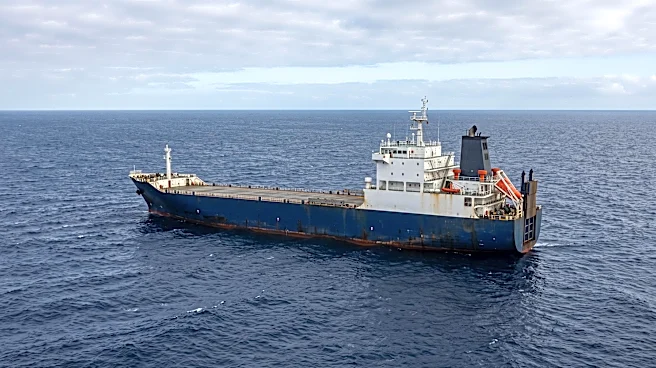
The crew of the U.S.-flagged cargo ship, SLNC York, was safely evacuated after the vessel experienced a water incursion while sailing in the Pacific Ocean. All 18 crew members were transferred to the passing LPG tanker Pacific Yantai. The incident occurred
as the SLNC York, a 9,500 dwt RoRo vessel built in 2010, was transiting from Honolulu to Japan in ballast. Schuyler Line Navigation Company, the U.S.-based operator, confirmed the evacuation and stated that the source of the water ingress is under investigation. Industry commentator Sal Mercogliano suggested, based on reviewed videos, that water might have entered through the shaft seal, leading to flooding in the engine compartment. The company is coordinating with both the U.S. Coast Guard and the Japan Coast Guard, and a support vessel is en route to assist the stable cargo ship, with plans to take it to port.
Why It's Important?
This incident highlights the inherent risks associated with maritime shipping, particularly for U.S.-flagged vessels that play a crucial role in international trade and national security. The safe evacuation of the crew underscores the importance of international maritime cooperation and established distress protocols, as a Hong Kong-registered vessel diverted its course to assist. For Schuyler Line Navigation, a company offering regular U.S. West Coast to Far East services, this event could lead to operational disruptions and a thorough review of vessel maintenance and safety procedures. The potential cause, a shaft seal failure, points to critical engineering vulnerabilities that can arise even in modern vessels. Ensuring the integrity of U.S.-flagged cargo ships is vital for maintaining supply chain reliability and protecting American maritime interests globally.
What's Next?
The immediate next steps involve the ongoing investigation into the precise cause of the water incursion. Schuyler Line Navigation will work with maritime authorities to determine whether the issue was a mechanical failure, a structural compromise, or another factor. The company plans to bring the SLNC York to port with the assistance of a support vessel, where more detailed inspections and repairs can be conducted. This incident may prompt a review of maintenance schedules and inspection protocols across Schuyler Line's fleet of seven ships. Depending on the findings, there could be broader implications for maritime safety regulations and vessel design standards, particularly concerning shaft seals and engine room integrity. The cooperation between the U.S. and Japan Coast Guards will continue as they manage the salvage operation and ensure maritime safety in the region.
Beyond the Headlines
Beyond the immediate safety and operational concerns, this event touches upon the broader resilience of global supply chains and the critical role of maritime transport. The safe evacuation, facilitated by an international vessel, exemplifies the unwritten code of the sea and the necessity of international cooperation in emergencies. Such incidents, while relatively rare, can lead to increased scrutiny of vessel age, maintenance practices, and the effectiveness of regulatory oversight. For the U.S. maritime industry, maintaining a robust and safe fleet is essential for economic competitiveness and strategic interests. The investigation's findings could influence future shipbuilding standards, insurance premiums, and operational guidelines for cargo vessels, potentially leading to advancements in marine engineering and safety technology to prevent similar occurrences.