






What's Happening?
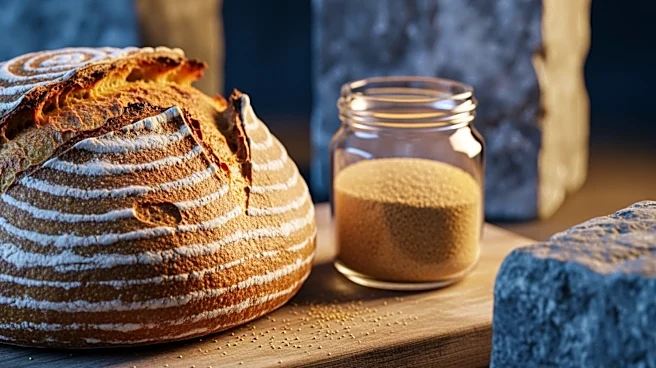
Researchers have discovered yeast in the gut of Oetzi the Iceman, a 5,300-year-old mummy found in the Alps, and have successfully used it to make sourdough bread. Oetzi, who was killed by an arrow and preserved in ice, was discovered in 1991. The yeast,
found in his gut, skin, and water melted from his body, is capable of surviving sub-zero temperatures. This yeast, along with other microbes, provides a unique insight into ancient human life and the microbiome. The study, published in the journal Microbiome, highlights the presence of both ancient and modern microbial life in Oetzi's body, suggesting that these organisms have adapted to the cold environment over millennia.
Why It's Important?
The discovery of ancient yeast in Oetzi's body has significant implications for understanding ancient human diets and microbiomes. The ability to use this yeast to make sourdough bread demonstrates the potential for ancient microbes to be harnessed for modern culinary and scientific purposes. Additionally, the study of Oetzi's microbiome offers insights into the dietary habits of ancient humans, which included more fiber and whole grains compared to modern diets. This research could lead to new applications in biotechnology, such as using the yeast to break down environmental contaminants like phenol, which the yeast can consume.
What's Next?
Further research is needed to determine the full potential of the yeast and other microbes found in Oetzi's body. Scientists are considering using the yeast for brewing beer, and there is interest in exploring its potential for environmental applications. Continued study of Oetzi's microbiome may reveal more about ancient human health and diet, providing a deeper understanding of how modern humans have evolved. Researchers are also interested in whether the yeast is affecting the preservation of the mummy, which could impact future conservation efforts.
Beyond the Headlines
The study of Oetzi's microbiome challenges the notion of mummies as static time capsules, instead presenting them as dynamic ecosystems. This research highlights the complex interactions between ancient and modern microbes, offering a unique perspective on the continuity of life across millennia. The findings also raise questions about the ethical considerations of using ancient biological materials for modern purposes, such as food production and environmental remediation.