






What's Happening?
Six children and seven women were released by a gang in Haiti after more than 50 people were kidnapped following a deadly attack in Kenscoff, near Port-au-Prince. UNICEF confirmed the release, noting that three children were under the age of two, one
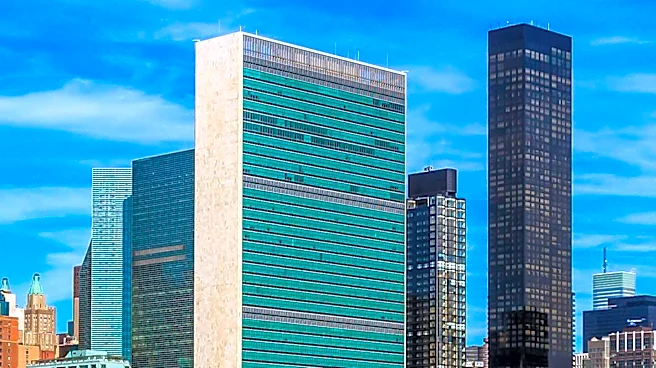
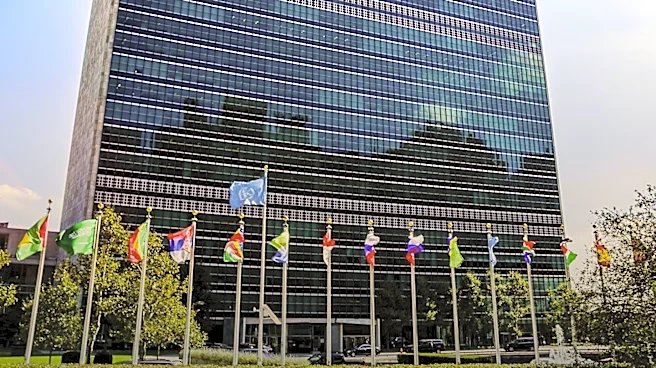
was seven, and two were teenagers. This incident follows a mass abduction where at least 47 people were killed in Kenscoff. A gang leader known as Izo 2 had threatened to execute all hostages if police engaged his members. This attack prompted an emergency meeting of the U.N. Security Council, where U.S. Deputy Ambassador Jennifer Locetta reiterated the United States' commitment to supporting Haitian-led security efforts to combat gang terror. She urged U.N. members to provide necessary resources and equipment for a new U.N.-backed gang-fighting force and to invest in infrastructure and job opportunities to deter gang recruitment. Luis Ruiz Massieu, the U.N. special envoy to Haiti, highlighted the widespread indignation caused by the attack and welcomed Haiti's decision to coordinate national police, armed forces, and the gang suppression force.
Why It's Important?
The ongoing gang violence and mass kidnappings in Haiti pose a significant humanitarian crisis and a direct challenge to regional stability, impacting U.S. foreign policy and security interests. The U.S. commitment to supporting Haitian-led security efforts underscores its concern over the destabilization of a neighboring country, which can lead to increased migration pressures and potential security threats. The call for international support and resources for a gang suppression force highlights the recognition that Haiti's internal security issues require a coordinated global response. Furthermore, the gangs' stated aim to prevent future elections and hold democracy hostage directly threatens democratic governance in the region, aligning with broader U.S. foreign policy goals of promoting democracy and stability. The displacement of nearly 1.5 million people, half of whom are children, also creates a severe humanitarian burden that could necessitate international aid and intervention, with the U.S. likely being a major contributor.
What's Next?
The immediate next steps involve the swift deployment and operationalization of the U.N.-backed gang-fighting force, contingent on U.N. member states providing the requested equipment and resources. Haitian authorities are expected to continue coordinating their national police, armed forces, and the gang suppression force to reinforce security in Port-au-Prince and Kenscoff. The U.S. will likely continue to advocate for international contributions and may offer further bilateral assistance to Haiti's security forces. Additionally, there will be an increased focus on humanitarian aid for the over 2,600 people displaced by the Kenscoff attack and the nearly 1.5 million internally displaced individuals across Haiti. Efforts to provide alternative economic opportunities and infrastructure development will also be crucial to address the root causes of gang recruitment, though these are longer-term initiatives. The international community will closely monitor the effectiveness of the new security force and the overall stability in Haiti.
Beyond the Headlines
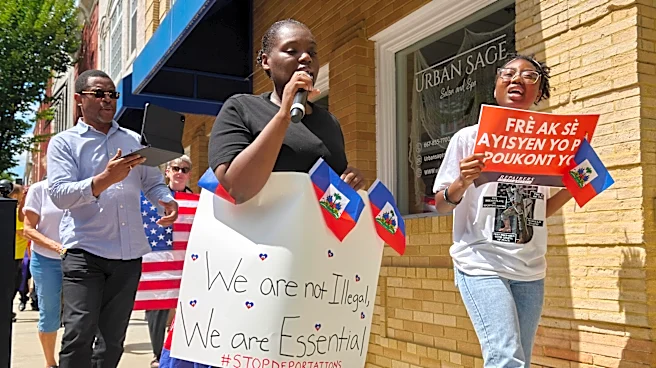
The crisis in Haiti extends beyond immediate security concerns, touching upon profound ethical and legal dimensions. The repeated targeting of civilians, including women and children, by armed gangs raises serious questions about human rights protections and the international community's responsibility to protect vulnerable populations. The gangs' explicit goal of disrupting democratic processes highlights a broader struggle for governance and the rule of law in Haiti, suggesting a potential long-term shift towards a state of chronic instability if not effectively addressed. The ongoing deportations to Haiti, even amidst severe internal displacement and violence, present a complex ethical dilemma for countries like the U.S., balancing immigration policies with humanitarian concerns. This situation also underscores the interconnectedness of security, economic development, and political stability, demonstrating that a purely military solution is insufficient without parallel investments in social and economic infrastructure to offer a viable future for Haiti's population.