






What's Happening?
The Organization of American States (OAS) is involved in assessing regional variations in disaster risk management (DRM) strategies across the Amazon River Basin. A study, based on qualitative research and a multi-source review of academic literature
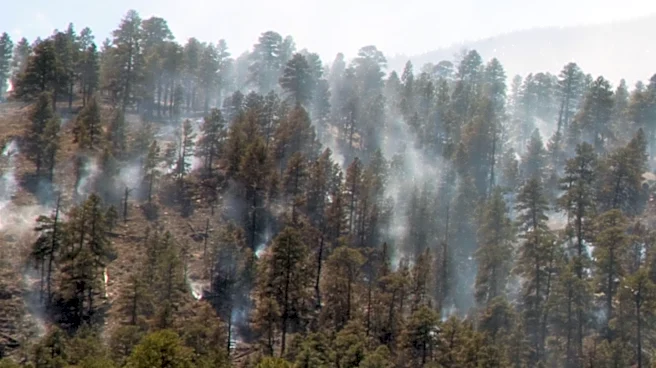
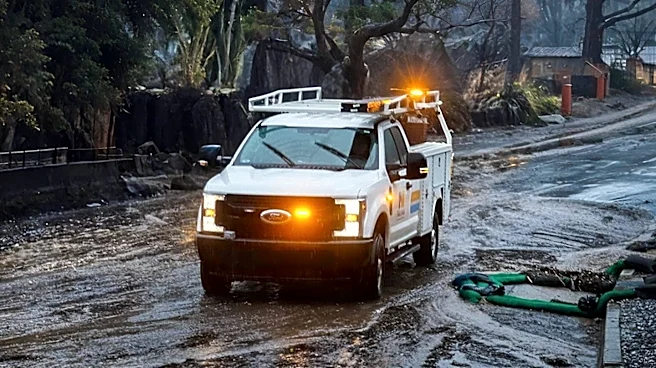
and government documents, examines national policies and institutional arrangements in the eight sovereign Amazon Basin countries. It also scrutinizes regional cooperation initiatives promoted by organizations like the Amazon Cooperation Treaty Organization (ACTO), the Andean Community (CAN), and MERCOSUR, in addition to the OAS. The analysis utilizes the Sendai Framework for Disaster Risk Reduction to evaluate the design and implementation of disaster risk governance (DRG) arrangements. The Amazon Basin faces increasing risks from climate change, including floods, droughts, and fire hazards, which pose threats to communities, ecosystems, and regional development. These climate-related hazards often have transboundary impacts, affecting multiple countries simultaneously due to the basin’s interconnected hydrological and ecological systems. The assessment aims to identify areas where alignment, strengthening, or improved implementation strategies can enhance the capacity of Amazonian countries to reduce disaster risk and build resilience against intensifying climate change impacts.
Why It's Important?
This initiative is crucial for the United States due to the interconnectedness of global environmental stability and regional security. The Amazon Basin, a vital global ecosystem, plays a significant role in climate regulation, and its degradation can have far-reaching environmental consequences, including altered weather patterns that could affect U.S. agriculture and natural disaster frequency. Instability caused by climate-induced disasters in South America can also lead to increased migration pressures and regional conflicts, indirectly impacting U.S. foreign policy and border security. By supporting and participating in efforts like those facilitated by the OAS, the U.S. can contribute to regional stability and mitigate potential future challenges. Furthermore, effective disaster risk management in the Amazon can protect biodiversity and indigenous communities, aligning with U.S. environmental and human rights foreign policy objectives. The findings of this assessment can inform international aid and development strategies, ensuring that resources are directed towards effective, regionally coordinated solutions.
What's Next?
The assessment categorizes national strategies into thematic areas such as flood management, drought resilience, fire risk mitigation, and water resource governance, providing a comprehensive view of policy responses to climate-related hazards. The analysis also considers how cross-border water conflicts and cooperation in the Amazon Basin present both challenges and opportunities for integrated disaster risk governance. The study indicates a gradual strengthening of disaster risk governance across the Amazon Basin, though institutional capacity remains uneven. While several countries have established DRM frameworks and civil protection systems, disparities in institutional capacity and coordination result in varying levels of preparedness across the region. Risk knowledge systems are expanding but remain fragmented across national boundaries, with most data platforms being nationally organized and lacking interoperability for monitoring transboundary hazards. Future steps will likely involve leveraging these findings to advocate for stronger regional cooperation, enhanced data sharing, and the integration of Indigenous knowledge systems into governance processes to significantly bolster disaster risk reduction.
Beyond the Headlines
Beyond the immediate implications of disaster preparedness, this OAS-supported assessment highlights deeper issues concerning environmental governance and sustainable development in the Amazon. Policies related to forests, land use, and water resources directly influence exposure and vulnerability to floods, droughts, and ecosystem degradation. A critical finding is that disaster risk financing still prioritizes recovery over prevention, with limited investments in preventive resilience measures despite the development of contingency funds and insurance schemes. This reveals a systemic challenge in shifting from reactive to proactive disaster management. The emphasis on stronger regional cooperation and inclusive governance underscores the ethical imperative to incorporate diverse stakeholders, including indigenous communities, whose traditional knowledge is invaluable for ecological resilience. The policy relevance of these findings is amplified by recent international developments, such as COP30 being hosted in Belém, Brazil, which creates an opportunity to advance more coordinated approaches to disaster risk governance and link climate adaptation with disaster risk reduction and climate finance.