


What's Happening?
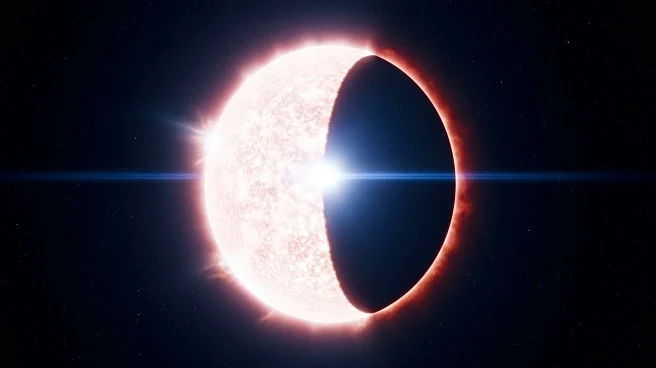
Astronomers have observed a rare dimming event in a distant Sun-like star, J0705+0612, which dimmed to one-fortieth of its normal brightness for nearly nine months. This phenomenon was studied using the Gemini South telescope in Chile, revealing that
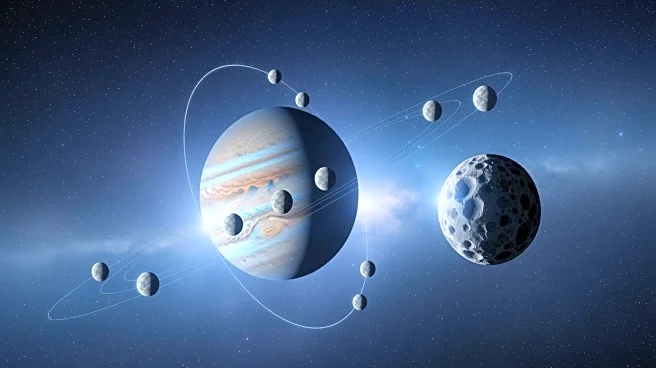
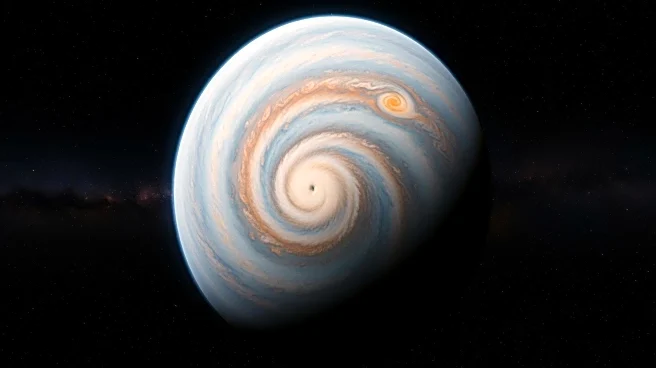
the star was obscured by a massive cloud of gas and dust. The cloud is believed to be gravitationally bound to a massive companion object, possibly a giant planet or a low-mass star. The event provided a unique opportunity to study the internal gas motions within the cloud, revealing winds of vaporized metals such as iron and calcium. This discovery highlights the dynamic and chaotic processes that can occur in mature planetary systems.
Why It's Important?
The findings from this study are significant as they provide insights into the ongoing processes in planetary systems long after their formation. The ability to measure the internal gas motions within the cloud offers a new perspective on the interactions between stars and their surrounding environments. This research underscores the importance of advanced astronomical instruments like the Gemini High-resolution Optical SpecTrograph (GHOST), which enabled the detailed analysis of the cloud's composition and dynamics. The study also suggests that even ancient star systems can experience large-scale collisions, contributing to our understanding of planetary system evolution.
What's Next?
Future research will likely focus on further characterizing the companion object and understanding the origins of the massive cloud. Continued observations with advanced telescopes could provide more detailed information about the chemical composition and dynamics of similar systems. This research may also inform models of planetary system development and the potential for catastrophic events in other star systems.