




What's Happening?
Researchers at the University of Alaska Fairbanks (UAF) are leading a $6 million project funded by the National Science Foundation (NSF) to extract critical minerals from coal waste. This initiative involves using microorganisms and artificial intelligence
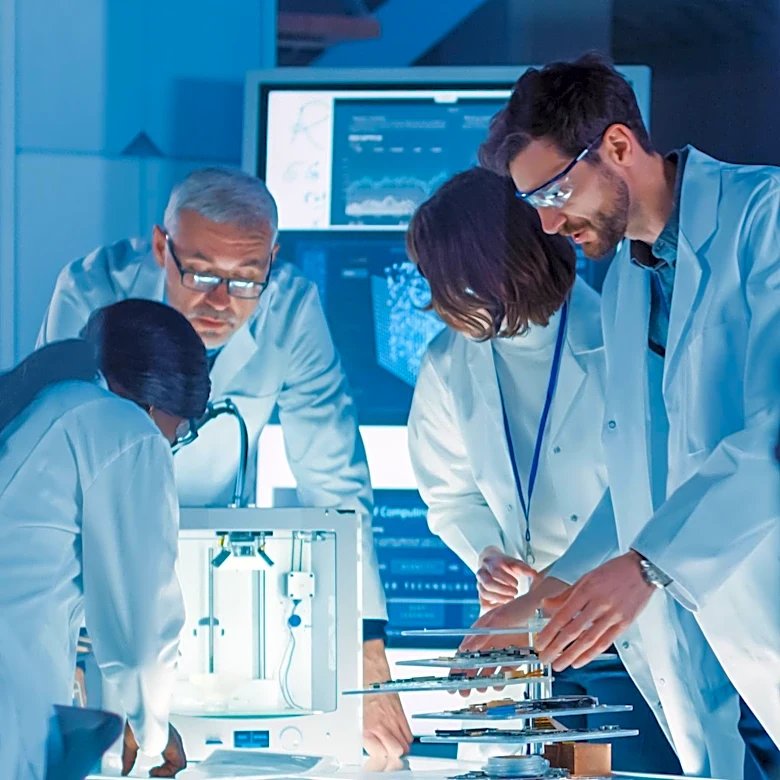
to recover rare earth elements from coal ash, a byproduct of decades of coal mining and use in Alaska. The project aims to transform this waste into a valuable resource, reducing reliance on foreign sources for these essential minerals. Srijan Aggarwal, a UAF professor of environmental engineering and principal investigator, highlighted that the approach leverages natural metabolic processes of microorganisms to bind to and extract valuable minerals, avoiding harsh chemicals. Artificial intelligence will be used to predict optimal waste materials and harvesting conditions. The project is a collaborative effort involving UAF, the University of Alaska Anchorage, Montana Technological University, and the University of Wyoming, funded through NSF’s Established Program to Stimulate Competitive Research (EPSCoR). UAF's portion of the work is supported by nearly $913,000 of the total award.
Why It's Important?
This project holds significant importance for U.S. national security and economic independence. Rare earth elements are crucial components in modern technologies, including cell phones, electric vehicles, and defense systems, with current supplies largely dominated by foreign nations. Developing a domestic source from coal waste would strengthen the U.S. supply chain for these critical minerals, reducing geopolitical vulnerabilities. Furthermore, the initiative aims to create market-ready jobs in Alaska within the next four years, fostering local industry growth and economic diversification. The integration of biotechnology and AI in mineral extraction represents an innovative and potentially more sustainable approach compared to traditional methods, aligning with broader goals of environmental responsibility and resource efficiency. The workforce development component, including micro-credentials, will also prepare a skilled labor force for emerging industries at the intersection of mining, biotechnology, and AI.
What's Next?
Over the next four years, researchers plan to transition the laboratory science into practical, market-ready applications and jobs in Alaska. The project will focus on understanding how bioreactor operating conditions affect mineral recovery, process stability, and energy demand, particularly in Alaska's remote energy environment. Artificial intelligence will play a crucial role in predicting recovery rates from different materials and developing controls for bioreactor operations based on changing conditions and energy availability. A virtual pilot plant will integrate experimental results with computer models to optimize recovery processes and energy systems. The collaboration also includes strengthening research capacity and workforce development across Alaska, Montana, and Wyoming through industry-aligned coursework, micro-credentials, an early-career leadership council, and a tri-state field course. The ultimate goal is to establish a 'smart bio-refinery' that can efficiently and sustainably extract critical minerals.
Beyond the Headlines
Beyond the immediate goal of mineral extraction, this project signifies a broader shift towards viewing industrial waste as a valuable resource, promoting a circular economy model. The use of microorganisms and AI in this context highlights the growing potential of bio-engineering and advanced computing to address complex industrial and environmental challenges. This interdisciplinary approach could set a precedent for other waste-to-resource initiatives, potentially transforming how various industrial byproducts are managed and utilized. Ethically, it addresses concerns about environmental impact by offering a cleaner alternative to traditional mining practices and reducing the need for new resource extraction. Legally and culturally, successful implementation could influence future regulations regarding waste management and resource recovery, fostering a culture of innovation and sustainability in resource-dependent regions like Alaska. The project also underscores the strategic importance of federal funding in driving scientific innovation and addressing critical national needs.