
What's Happening?
In recent years, the field of ecology has increasingly embraced artificial intelligence (AI) and other technologies, leading to a significant shift in how ecological research is conducted. Researchers
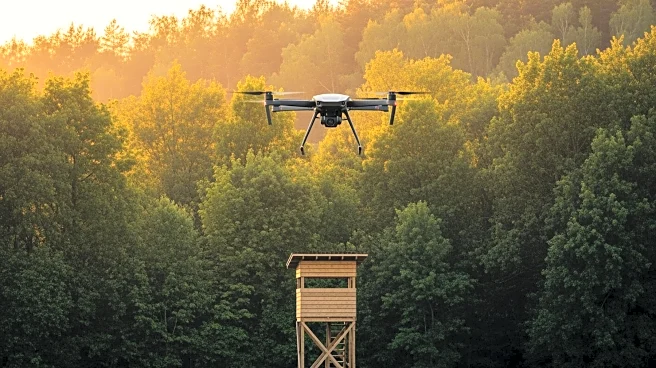
like Tadeo Ramirez-Parada have utilized machine-learning algorithms to analyze large datasets, such as digitized herbarium specimens, to study ecological phenomena like plant flowering times in response to climate change. This trend towards data-driven research is transforming the discipline, allowing for unprecedented monitoring capabilities and insights into biodiversity and global change. However, some ecologists express concern that the reliance on technology is causing a decline in traditional fieldwork, which they argue is essential for maintaining a deep connection with nature and ensuring accurate ecological understanding.
Why It's Important?
The integration of AI in ecology offers substantial benefits, such as enhanced data collection and analysis capabilities, which can lead to better understanding and management of biodiversity and ecological changes. This technological shift allows for continuous monitoring and data collection at scales previously unattainable, potentially revolutionizing conservation efforts. However, the decline in fieldwork raises concerns about the loss of experiential knowledge and potential biases in data interpretation. The shift may also impact the engagement with local communities, which is crucial for effective conservation strategies. Balancing technological advancements with traditional fieldwork is essential to maintain a comprehensive approach to ecological research.
What's Next?
As AI continues to advance, its role in ecology is likely to expand, offering new tools and methods for researchers. However, the ecological community may need to address the potential downsides of reduced fieldwork by finding ways to integrate technology with hands-on research. This could involve developing hybrid approaches that leverage the strengths of both AI and fieldwork. Additionally, there may be a need for increased collaboration between ecologists and computer scientists to ensure that technological tools are used effectively and ethically. The future of ecology may depend on finding a balance that preserves the integrity and depth of ecological research while embracing the benefits of technological innovation.
Beyond the Headlines
The shift towards AI-driven ecology also raises ethical and cultural considerations, such as 'AI colonialism,' where data collected in developing regions are analyzed in wealthier countries, potentially marginalizing local researchers. Furthermore, the decline in fieldwork could lead to a disconnect between scientists and the natural environments they study, impacting the quality and relevance of ecological research. Addressing these issues will require thoughtful consideration of how technology is integrated into ecological practices and ensuring that local communities and researchers are actively involved in the research process.