





What's Happening?
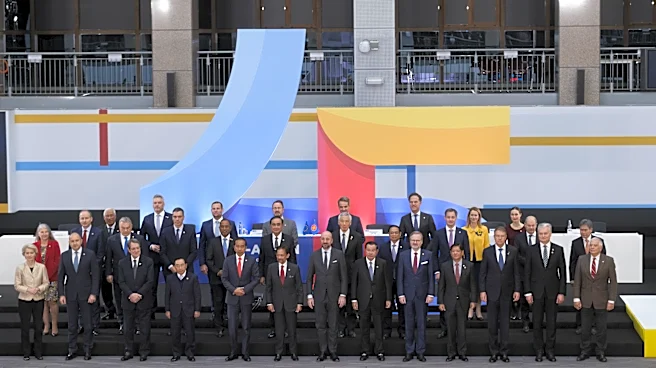
Britain and France are co-leading the first major 'boots on the ground' exercise for the Multinational Force Ukraine (MNF-U), the military arm of the Coalition of the Willing. This fortnight-long exercise, named 'Koalicja,' is taking place in Poland,
approximately 100 kilometers from the Ukrainian border, from November 9-22. It involves around 2,800 troops from 11 countries, including Belgium, Estonia, Germany, Lithuania, the Netherlands, Spain, Sweden, and Turkey. The primary purpose of the drill is to rehearse how allied troops would provide support to Ukraine and its military following a potential ceasefire with Russia. The exercise will test the logistical capabilities of multinational units, focusing on their ability to rapidly deploy, move equipment across borders, operate under a single command, and maintain supply lines. British Lt. Gen. Tom Bateman and French Gen. Armel Dirou are overseeing the exercise.
Why It's Important?
This exercise is a critical step in preparing for a post-conflict scenario in Ukraine, demonstrating a tangible commitment from a coalition of nations to support Ukraine's long-term security and stability. For the U.S. and its NATO allies, it signifies a proactive approach to regional security, ensuring that a framework for international military assistance is in place should hostilities cease. The ability of diverse military units to integrate and operate effectively under a unified command is crucial for any future peacekeeping or support missions, highlighting the importance of interoperability among allied forces. While the U.S. is not explicitly mentioned as a participant in this specific exercise, its broader strategic interests in European security and the stability of Ukraine are directly impacted by such preparatory actions. The exercise also sends a clear message of sustained international support for Ukraine, potentially influencing geopolitical dynamics in the region.
What's Next?
The exercise will conclude on November 22, providing valuable insights into the logistical and operational challenges of deploying a multinational force. The findings will likely inform future training protocols and strategic planning for the MNF-U. While no ceasefire agreement is currently in place, Britain and France have expressed their intent to deploy forces to Ukraine after a ceasefire, with plans for military hubs on Ukrainian soil. Poland has committed to coordinating troop movements through its territory but will not send its own soldiers into Ukraine. The political commitments from participating nations vary, with some, like Germany, considering contributions on neighboring NATO territory, and others, like Italy, ruling out deployments inside Ukraine. The success of 'Koalicja' will be a key factor in shaping the readiness and effectiveness of this multinational force for its intended mission.
Beyond the Headlines
Beyond the immediate military objectives, this exercise carries significant diplomatic and strategic weight. It underscores the evolving nature of international security cooperation, where coalitions of the willing are formed to address specific regional crises. The focus on post-ceasefire support suggests a long-term vision for Ukraine's security, moving beyond immediate conflict response to stabilization and rebuilding efforts. The exercise also highlights the complex political considerations involved in such multinational endeavors, as evidenced by the varying levels of commitment and conditions set by participating nations. This initiative could serve as a precedent for future international responses to conflicts, emphasizing the importance of pre-emptive planning and interoperability. It also implicitly challenges the notion of a purely national defense, promoting a more integrated and collaborative approach to global security challenges.