



What's Happening?
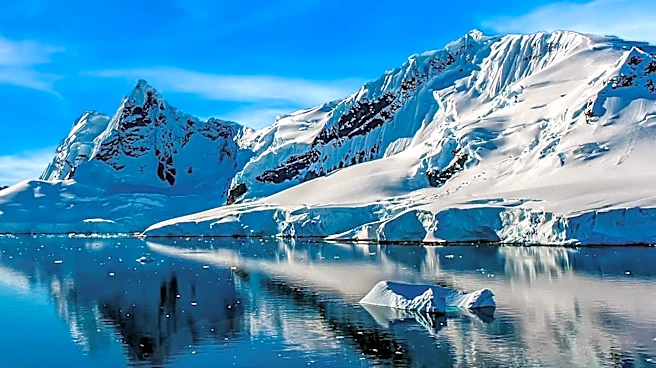
Don Juan Pond, located in Antarctica's Upper Wright Valley, remains unfrozen despite surrounding temperatures dropping to minus 50 degrees Celsius. This phenomenon is attributed to the pond's high concentration of calcium and chloride ions, which significantly
lower the freezing point of the water. The pond's water contains up to 40 percent salt by weight, allowing it to remain liquid down to approximately minus 52 degrees Celsius. This unique chemical composition prevents the water from freezing under the same conditions as freshwater. The pond is not a stable body of water but a dynamic system where water levels and salinity can change due to evaporation and the influx of new water, possibly from deep groundwater or surface processes.
Why It's Important?
The study of Don Juan Pond is significant for understanding extreme environments on Earth and potentially on other planets like Mars. The pond's ability to remain liquid in such cold conditions provides insights into how brines can exist in similar environments, which is crucial for planetary science. This knowledge could help explain transient moisture or ancient salt deposits on Mars, offering clues about the planet's past climate and the possibility of liquid water. Additionally, the pond challenges the assumption that liquid water automatically indicates a habitable environment, as its high salinity makes it inhospitable for most life forms.
What's Next?
Future research may focus on further understanding the sources of water that maintain Don Juan Pond's salinity and liquid state. Scientists may continue to explore the balance between deep groundwater contributions and surface processes like deliquescence and snowmelt. These studies could refine models of how similar brines might behave on Mars, aiding in the search for signs of past or present life. Additionally, researchers might investigate the microbial life in the pond's sediments to understand how life can adapt to such extreme conditions.
Beyond the Headlines
The existence of Don Juan Pond raises questions about the limits of life in extreme environments. While the pond's conditions are too harsh for most known life forms, the presence of microbial life in its sediments suggests that life can persist in some form. This has implications for astrobiology, as it suggests that life could exist in similarly extreme environments elsewhere in the solar system. The pond also serves as a natural laboratory for studying the effects of high salinity on water chemistry and the potential for life in extreme conditions.