


What's Happening?
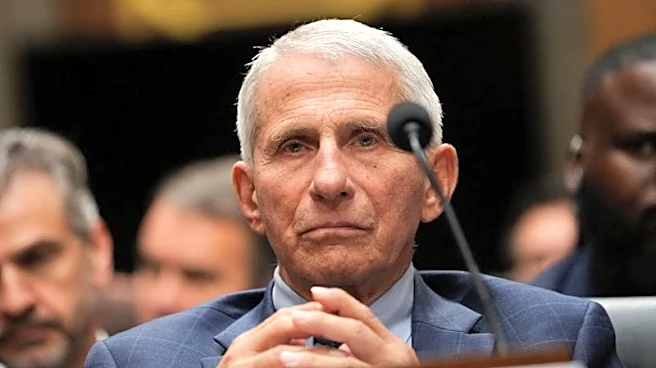
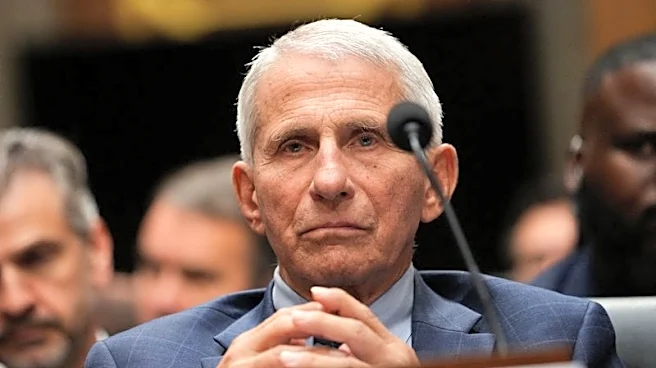
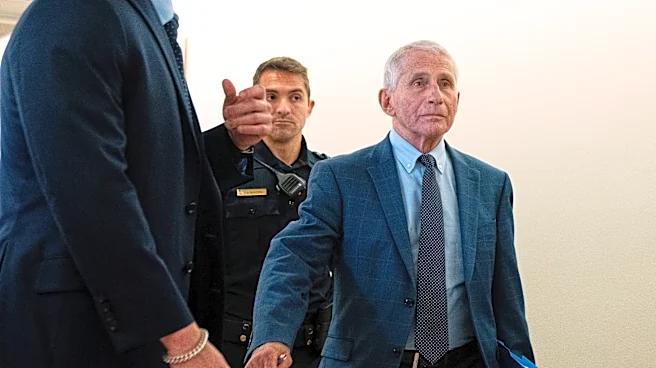
The Senate Homeland Security Committee has passed a resolution to hold Anthony Fauci in contempt of Congress after he invoked his Fifth Amendment rights during a hearing on the origins of the COVID-19 virus. The resolution was passed along partisan lines,
with all eight Republican members voting in favor and all five Democrats opposing. Fauci, the former director of the National Institute of Allergy and Infectious Diseases, was a prominent figure during the pandemic, often appearing alongside President Trump. The committee, chaired by Sen. Rand Paul, will recommend that the Department of Justice consider charging Fauci with criminal contempt. The resolution follows Fauci's refusal to testify, citing concerns that Republicans intended to trap him into making false statements under oath.
Why It's Important?
This development underscores the ongoing political tensions surrounding the COVID-19 pandemic and its origins. The contempt resolution reflects broader partisan divides, with Republicans pushing for accountability and Democrats warning of potential overreach. If the Department of Justice pursues charges, it could set a precedent affecting future congressional oversight and the invocation of constitutional rights by witnesses. The situation also highlights the enduring controversy over the pandemic's origins, with some Republicans advocating for the lab-leak theory, despite scientific consensus pointing to a natural origin. The outcome of this case could influence public trust in government institutions and the handling of future public health crises.
What's Next?
The Department of Justice will decide whether to pursue contempt charges against Fauci, which could lead to legal proceedings. If charged and convicted, Fauci could face imprisonment and fines. The case may also prompt further political and legal debates over the limits of congressional authority and the protection of constitutional rights. Additionally, the resolution could impact Fauci's legacy and the public's perception of his role during the pandemic. The decision by the DOJ will be closely watched by political leaders, legal experts, and the public, as it may have implications for future congressional investigations.