
What's Happening?
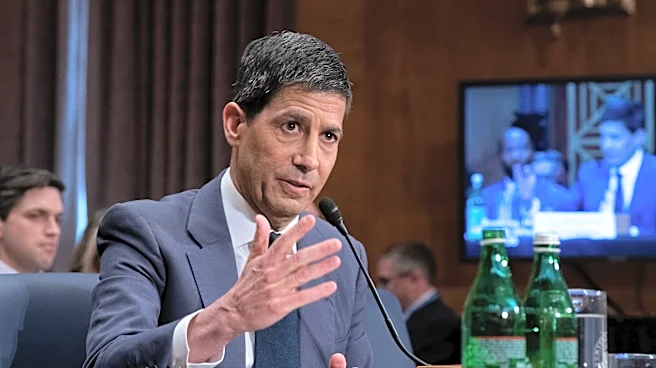
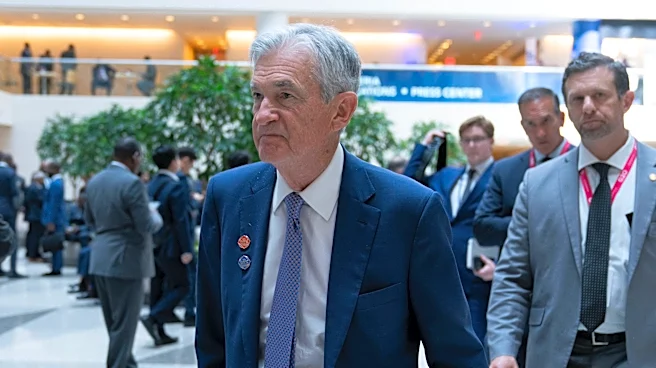
A Senate committee has scheduled a vote to advance Kevin Warsh's nomination to lead the Federal Reserve, following the closure of a criminal investigation into current Fed Chair Jerome H. Powell. U.S.
Attorney Jeanine Pirro announced the end of the probe, which had been a significant barrier to Warsh's confirmation. The investigation focused on Powell and the Federal Reserve's $2.5 billion headquarters renovation. Although the inquiry could resume if new evidence emerges, its closure has cleared a path for Warsh's nomination. The Senate Banking Committee, led by Republicans, plans to vote on April 29. The committee holds a narrow 13-11 majority, meaning a single Republican defection could affect the outcome. Democrats, led by Sen. Elizabeth Warren, remain critical of the nomination, citing concerns over Fed independence and President Trump's influence.
Why It's Important?
The advancement of Kevin Warsh's nomination is significant as it could lead to a shift in Federal Reserve policies, particularly regarding interest rates. President Trump has been vocal about his desire to lower interest rates, a stance that Warsh may support if confirmed. This potential change in leadership comes at a critical time for the U.S. economy, which could face volatility if the transition is not smooth. The closure of the investigation into Powell removes a major obstacle, but concerns about the Fed's independence persist. Democrats argue that Warsh's confirmation could undermine the Fed's autonomy, a cornerstone of its ability to manage monetary policy effectively.
What's Next?
The Senate Banking Committee's vote on April 29 will be a pivotal moment for Warsh's nomination. If confirmed, Warsh will need to navigate the challenges of maintaining the Fed's independence while potentially aligning with President Trump's economic policies. The outcome of the vote could also influence market stability, as uncertainty about Fed leadership can lead to economic fluctuations. Additionally, the ongoing investigation into Fed governor Lisa Cook may continue to impact the political landscape surrounding the Federal Reserve.