



What's Happening?
Israel has decided to exclude France from upcoming direct talks with Lebanon, set to begin next week in Washington. This decision follows Israel's growing dissatisfaction with France's conduct over the past year, particularly regarding initiatives that
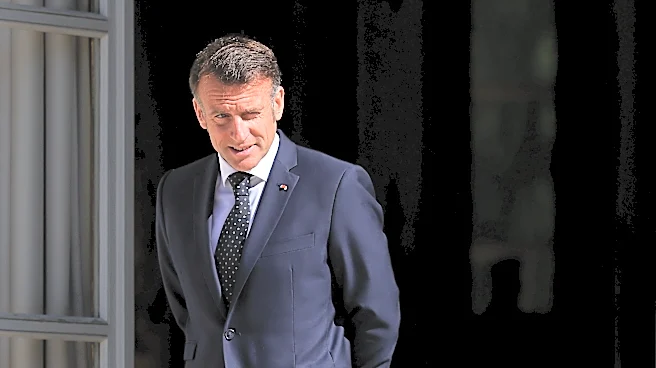
Israel perceives as limiting its ability to combat threats from Iran. France's refusal to allow US aircraft carrying weapons to Israel to pass through its airspace has further strained relations. Additionally, French President Emmanuel Macron has been pressuring Israel not to launch a ground operation in Lebanon, despite Hezbollah's continued aggression. The talks will involve Israel's ambassador to Washington, Yechiel Leiter, Lebanon's ambassador to the United States, Nada Hamadeh, and the American mediator Michel Issa.
Why It's Important?
The exclusion of France from these talks signifies a shift in diplomatic relations and highlights the complexities of international mediation in Middle Eastern conflicts. France's actions have been perceived by Israel as undermining its security efforts, leading to a reevaluation of France's role as a mediator. This development could impact future negotiations and alliances, as Israel seeks to address security concerns without French involvement. The decision also reflects broader geopolitical tensions, as countries navigate alliances and diplomatic strategies in response to regional conflicts.
What's Next?
The talks between Israel and Lebanon are expected to proceed without French involvement, focusing on security and disarmament issues. The United States will play a key role in mediating these discussions, potentially influencing the outcome and future diplomatic relations in the region. The exclusion of France may lead to diplomatic repercussions, as European countries react to Israel's decision. The situation remains fluid, with potential for further developments as negotiations unfold.