



What's Happening?
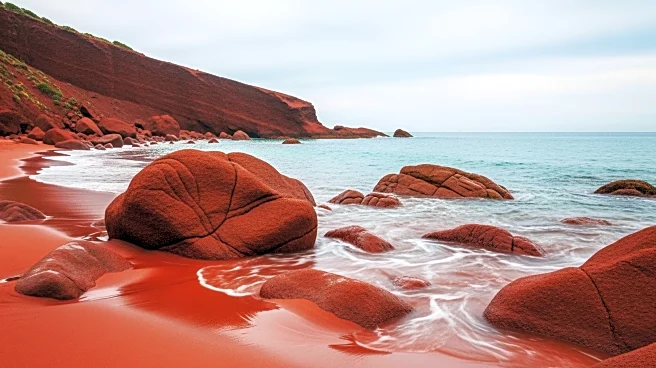
Recent rainfall on Iran's Hormuz Island has transformed the coastline of its famed Red Beach into a striking natural scene. The rain caused streams of iron-rich red soil to flow into the sea, turning the water shades of deep red. This phenomenon, which
contrasts sharply with the blue waters of the Persian Gulf, regularly attracts tourists, photographers, and social media attention. The island, known for its vivid red sand and cliffs due to high concentrations of iron oxide, lies in the Strait of Hormuz. Rainfall is relatively rare on this arid island, occurring mainly during winter and early spring.
Why It's Important?
The transformation of Hormuz Island's Red Beach highlights the unique natural phenomena that can draw significant tourist interest and media attention. Such events can boost local tourism, providing economic benefits to the region. Additionally, the red soil, known locally as gelak, is exported in limited quantities for use in cosmetics and pigments, adding economic value. The phenomenon also underscores the environmental and geological uniqueness of the region, which can be a focal point for scientific study and environmental conservation efforts.