
What's Happening?
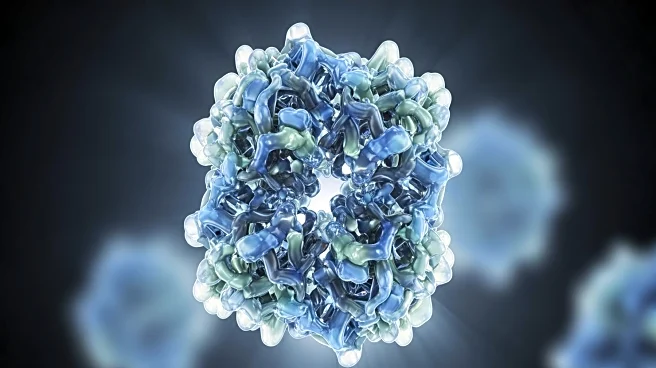
Researchers at the Karolinska Institutet have unveiled the atomic-level structure of the human polynucleotide phosphorylase (hPNPase), a crucial mitochondrial enzyme involved in RNA degradation. Using
cryo-electron microscopy, the team captured the enzyme in three functional states, revealing a sophisticated two-step mechanism for RNA processing. The study, published in Nucleic Acids Research, shows that the enzyme uses a base-flipping mechanism to control RNA cleavage, with magnesium ions playing a critical role in the catalytic process. This research provides insights into how mutations in hPNPase can lead to severe inherited diseases, such as Leigh syndrome and hereditary hearing loss.
Why It's Important?
The findings have significant implications for understanding mitochondrial diseases and genetic counseling. By mapping the enzyme's structure, researchers can better predict the pathogenicity of mutations in the PNPT1 gene, which encodes hPNPase. This knowledge aids in interpreting genetic test results and understanding the molecular basis of related diseases. The study also highlights the unique structural adaptations of the human enzyme compared to its bacterial counterparts, reflecting the specialized requirements of eukaryotic cells. These insights could eventually inform therapeutic strategies and drug discovery efforts targeting mitochondrial dysfunction.
What's Next?
The research opens new avenues for studying the interaction between hPNPase and other mitochondrial proteins, such as the helicase hSuv3, to form larger RNA degradation complexes. Future studies may explore the regulatory networks involving these proteins and their roles in mitochondrial RNA quality control. While therapeutic applications are still distant, the structural data provide a foundation for potential drug development targeting hPNPase activity. Continued research will be necessary to translate these findings into clinical applications and to further understand the enzyme's role in cellular energy production and disease.