






What's Happening?
The United States government is contemplating the disinterment of unidentified crew members of the USS Arizona, who perished during the 1941 Pearl Harbor attack, after achieving a significant DNA milestone. The Defense POW/MIA Accounting Agency (DPAA)
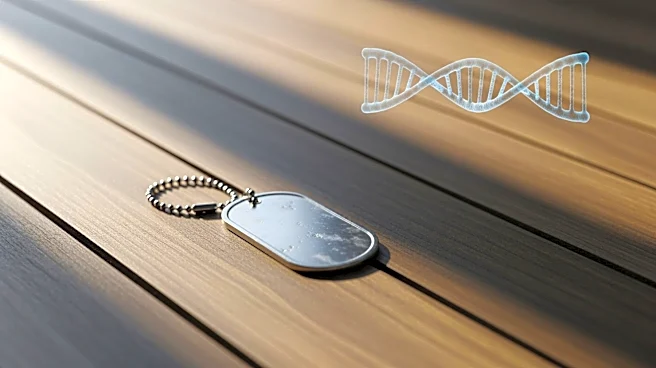
announced that enough family reference samples have been collected to potentially identify at least 60% of the disinterred crew members. This development marks a crucial step in the ongoing efforts to identify the remains of those who were buried as 'unknowns' following the attack. The DPAA's statement indicated that while the exact timing of the disinterments is not yet determined, the agency is now able to formally request and plan for these actions, pending Pentagon approval. The initiative is part of a broader effort led by Operation 85, a civilian organization founded by Kevin Kline, to identify the remaining unknowns from the USS Arizona.
Why It's Important?
This development is significant as it represents a major advancement in the identification of military personnel who have been unaccounted for since World War II. The ability to identify these individuals not only provides closure to the families of the deceased but also honors the service and sacrifice of those who served. The initiative underscores the importance of modern DNA technology in resolving historical military mysteries and reflects a commitment to honoring military personnel. The potential identification of these individuals could also lead to a reevaluation of historical records and provide new insights into the events surrounding the Pearl Harbor attack.
What's Next?
The next steps involve obtaining approval from the Pentagon to proceed with the disinterments. Once approved, the DPAA will begin the process of exhuming the remains for identification. This will likely involve collaboration with families, volunteers, and military officials to ensure the process is conducted respectfully and efficiently. The DPAA has also called on any family members related to missing crew members to assist in the identification efforts by providing DNA samples. The success of this initiative could pave the way for similar efforts to identify other unknown military personnel from past conflicts.