



What's Happening?
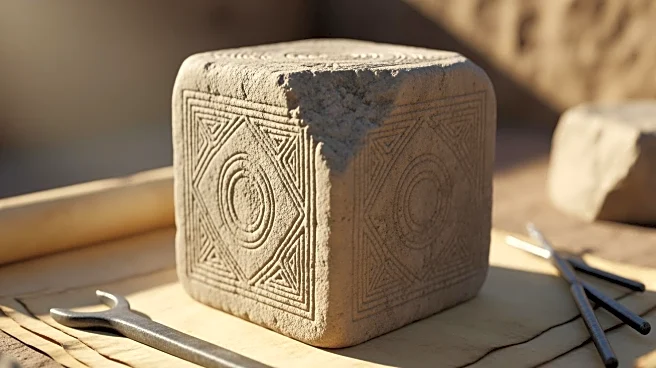
Archaeologists in Mexico have uncovered a 1,400-year-old skull with a unique cube shape, a discovery that stands out due to its unusual cranial modification style. The skull was found at Balcón de Montezuma in Tamaulipas and belonged to a middle-aged
man from a village that thrived around A.D. 400. Unlike the typical cranial modifications in the region, which usually result in an erect shape, this skull was flattened across the top, forming a blocklike structure known as a parallelepiped. This shape is more commonly associated with regions like Veracruz and Maya lands, but not with Tamaulipas. Chemical analysis confirmed that the individual was a local, suggesting that the modification was a result of cultural practices within the community rather than external influence.
Why It's Important?
The discovery of the cube-shaped skull is significant as it suggests a previously unrecognized cultural exchange or influence in the region. In Mesoamerica, distinct head shapes often indicated cultural identity, social rank, or group affiliation. The presence of this unique cranial modification in Tamaulipas implies that the community's traditions were more interconnected with broader cultural networks than previously understood. This finding challenges existing assumptions about the cultural isolation of the region and highlights the complexity of pre-Hispanic cultural interactions. It provides new insights into the social dynamics and cultural exchanges that occurred in ancient Mesoamerican societies.
What's Next?
Researchers, led by biological anthropologist Jesús Ernesto Velasco González, are continuing to analyze the site and its artifacts to better understand the cultural connections and influences in the region. The ongoing review of older excavations by the National Institute of Anthropology and History (INAH) aims to fill gaps in the understanding of the site's connections to other pre-Hispanic groups. This research could lead to a reevaluation of the cultural history of Tamaulipas and its role in the broader Mesoamerican context. Further studies may also explore the social and cultural significance of cranial modifications in the region.
Beyond the Headlines
The discovery of the cube-shaped skull opens up discussions about the ethical considerations of studying human remains and the cultural significance of cranial modification practices. It raises questions about the motivations behind such practices and their implications for understanding identity and social structures in ancient societies. Additionally, it highlights the importance of interdisciplinary research in archaeology, combining chemical analysis, anthropology, and history to uncover the complexities of past human cultures.