




What's Happening?
The Black Fiber & Textile Network (bftn), a collective of entrepreneurs and producers, is actively promoting regenerative practices within the natural fiber, textile, and plant dye industries across the United States. With over 80 members, primarily U.S.-based,
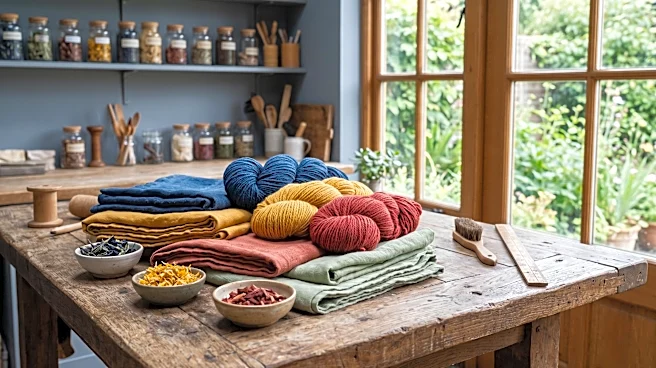
bftn focuses on supporting community workshops that offer free and low-cost education on natural fiber production, plant-based dyes, and agricultural skill-building. This initiative is rooted in a definition of regeneration that seeks to improve environmental conditions and create net positive impacts on ecosystems and communities. The network operates by connecting independent businesses and practitioners at various stages of production, from raw material cultivation to finished products, fostering collaboration to overcome structural barriers to sustainable textile and dye production. This approach views civic participation as a lifestyle, emphasizing care for the land, sustainable production, and mutual support among members.
Why It's Important?
The work of the Black Fiber & Textile Network is important for several reasons, particularly in the context of U.S. industry and society. Historically, the U.S. textile industry has seen a significant decline in domestic production and a shift from natural fibers to petroleum-based alternatives, contributing to pollution and environmental injustice. Bftn's efforts to rebuild regenerative material systems directly address these issues by promoting sustainable practices and local production. This initiative also has profound social implications, as it reclaims and highlights the often-overlooked contributions of Black communities to the nation's textile history, from enslaved labor in cotton and indigo production to the artistic and economic resilience of groups like the Gee's Bend Quilters. By fostering civic engagement through material systems, bftn aims to redistribute power and resources, creating more equitable and sustainable regional economies and strengthening democratic practices.
What's Next?
The Black Fiber & Textile Network will continue to expand its reach and impact by facilitating collaboration among its growing membership and funding community programs. The focus will remain on identifying and dismantling structural barriers to sustainable textile and dye production. Future efforts will likely involve further development of educational workshops to equip more individuals with skills in natural fiber and plant-based dye techniques. The network's emphasis on civic engagement suggests ongoing advocacy for policies that support regenerative agriculture and textile practices, potentially influencing broader U.S. agricultural and manufacturing sectors. As the network grows, it is expected to further solidify its role in shaping a more sustainable and equitable future for the U.S. fiber and textile industry, building on historical legacies and fostering community resilience.
Beyond the Headlines
Beyond the immediate impact on sustainable textile production, the Black Fiber & Textile Network's work carries deeper implications for cultural and historical recognition within the U.S. It challenges dominant narratives of American innovation by foregrounding the contributions of Black communities, particularly in the context of fiber and textile production, which were often built on forced labor. The network's approach to civic engagement, rooted in caring for the land and community-rooted production, offers a model for how material systems can function as governance systems, influencing access, agency, and collective futures. This initiative underscores the ethical imperative to acknowledge and address historical injustices while simultaneously building a more regenerative and inclusive economy. It highlights how everyday practices, such as producing and consuming textiles, are deeply intertwined with broader issues of climate change, environmental justice, and democratic participation, suggesting a long-term shift towards a more holistic understanding of sustainability and social responsibility.