





What's Happening?
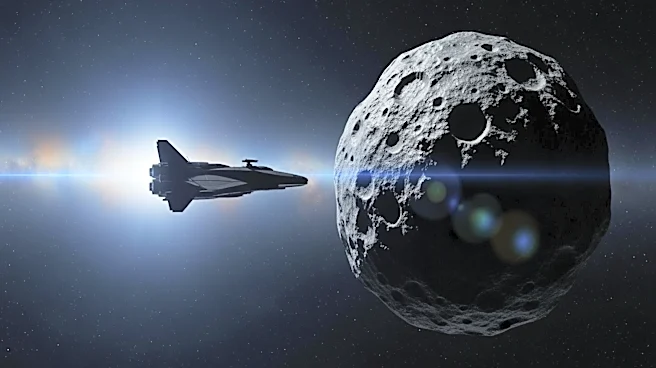
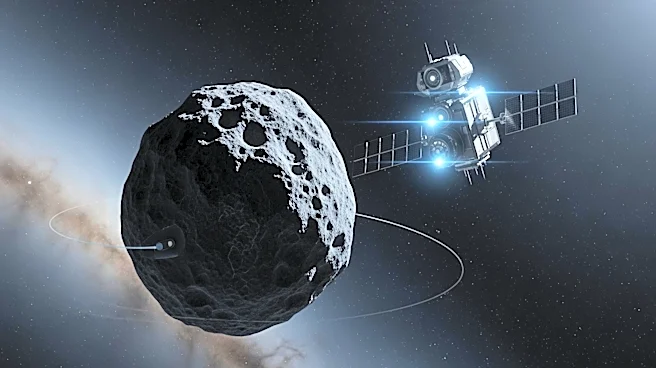
NASA has announced that the asteroid Apophis, also known as the 'God of Chaos,' will pass by Earth on April 13, 2029. This event marks the closest approach of a celestial object of its size in recorded history, coming within 20,000 miles of Earth, closer
than many satellites in geosynchronous orbit. Initially discovered in 2004, Apophis was once thought to have a 2.7% chance of impacting Earth, but updated radar observations in 2021 have ruled out any collision risk for at least the next 100 years. The asteroid, which is approximately 1,230 feet across, will be visible to the naked eye for several hours during its flyby. This rare event provides scientists with a unique opportunity to study the asteroid's characteristics and behavior up close.
Why It's Important?
The 2029 flyby of Apophis is significant for several reasons. Firstly, it offers a rare chance for scientists to observe and study a large asteroid at close range, which could enhance understanding of such celestial bodies and improve future impact predictions. The event also underscores the importance of continued monitoring and tracking of near-Earth objects to assess potential threats. Additionally, the flyby could influence public interest and policy regarding space exploration and planetary defense strategies. The ability to accurately predict and track the paths of asteroids like Apophis is crucial for developing effective measures to protect Earth from potential future impacts.
What's Next?
As the 2029 flyby approaches, scientists and astronomers will continue to monitor Apophis to refine its trajectory and study its physical properties. This ongoing research may involve using optical telescopes and ground-based radar to gather more data. The event is likely to attract significant attention from the scientific community and the public, potentially leading to increased funding and support for asteroid research and planetary defense initiatives. Additionally, the flyby may inspire educational programs and public outreach efforts to raise awareness about the importance of space science and exploration.