





What's Happening?
Scientists are implementing innovative strategies to combat the spread of mosquito-borne diseases, which are becoming more prevalent as climate change extends mosquito seasons. In the San Gabriel Valley, east of Los Angeles, the Mosquito Control District
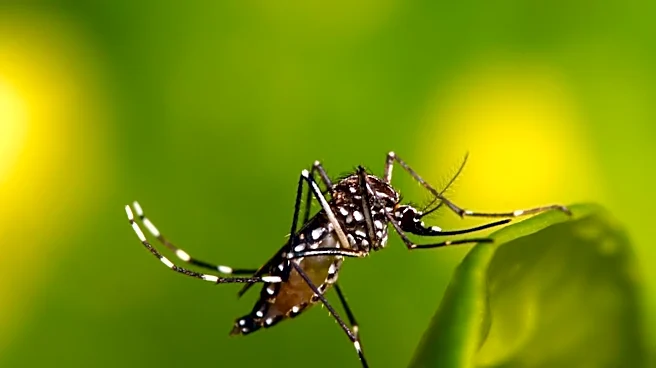
is releasing thousands of male Aedes aegypti mosquitoes infected with a naturally occurring bacteria called Wolbachia. These male mosquitoes, supplied by Professor Stephen Dobson's company MosquitoMate, are bred in a lab and shipped to control districts. When these Wolbachia-infected males mate with wild female mosquitoes, the females become sterile, and their eggs do not hatch. This method aims to reduce the overall mosquito population and, consequently, the transmission of diseases such as Zika, West Nile virus, and dengue fever. Previous studies have shown this approach can reduce mosquito populations by 70 to 95 percent, with some communities experiencing an 89 percent drop in dengue cases.
Why It's Important?
The warming climate is significantly impacting public health in the U.S. by extending mosquito seasons and expanding the geographical range of disease-carrying mosquitoes. This means more people are at risk of contracting serious illnesses like Zika, West Nile virus, and dengue fever, which can lead to severe health complications and even death. The deployment of Wolbachia-infected mosquitoes represents a crucial advancement in public health strategies, offering a non-genetically modified and environmentally friendly alternative to traditional pesticide-based control methods. This approach has the potential to reduce healthcare burdens, prevent outbreaks, and protect vulnerable populations, particularly in areas where these diseases are emerging due to climate shifts. The success of these programs could also inform global efforts to manage vector-borne diseases, providing a scalable solution to a growing international health challenge.
What's Next?
The San Gabriel Valley Mosquito Control District will continue to monitor the effectiveness of these releases by tracking the number of disease-carrying female mosquitoes in their traps. If the number of females decreases, it will indicate the success of the Wolbachia-infected males in reducing the population. Continued research and development in this field are expected, potentially leading to further refinements of the technique and its application to other mosquito species or disease vectors. The expansion of this EPA-approved method to more regions across the U.S. and globally is also a likely next step, especially as climate change continues to exacerbate the problem of mosquito-borne diseases. Public education campaigns will also be vital to inform communities about this novel approach and address any concerns regarding the release of mosquitoes.
Beyond the Headlines
This scientific endeavor highlights the complex interplay between climate change, public health, and ecological innovation. The use of biological controls, like Wolbachia bacteria, represents a paradigm shift from broad-spectrum chemical interventions to more targeted and sustainable solutions. This approach raises important ethical considerations regarding human intervention in natural ecosystems, even if the bacteria is naturally occurring and the mosquitoes are not genetically modified. It also underscores the urgent need for proactive and adaptive strategies to mitigate the health impacts of climate change, moving beyond reactive measures to preventative ones. The success of such programs could foster greater public acceptance of scientific solutions to environmental challenges and encourage further investment in biotechnological research for public good, ultimately shaping how societies respond to future health crises driven by environmental shifts.