
What's Happening?
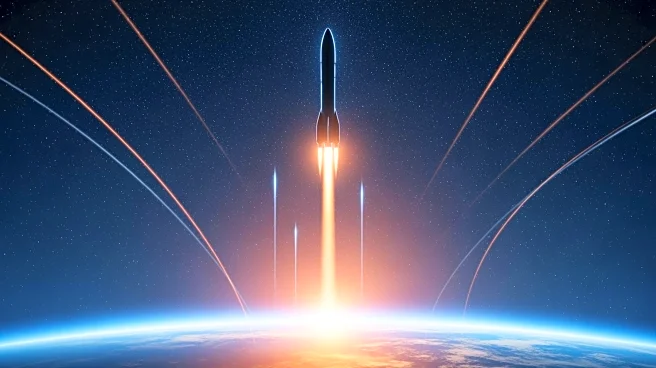
SpaceX successfully launched 29 Starlink satellites into low Earth orbit from Cape Canaveral Space Force Station in Florida. The launch took place early Monday morning, December 15, 2025, at 12:25 a.m.
EST. Despite forecasts predicting poor weather conditions, the Falcon 9 rocket managed to lift off without issue. The two-stage rocket reached space approximately 8 minutes and 40 seconds after launch. The upper stage of the Falcon 9 was tasked with deploying the Starlink broadband internet relay satellites after a coast period and a second engine firing. Meanwhile, the rocket's first stage completed its mission and returned to the Atlantic Ocean, landing on the autonomous drone ship 'A Shortfall of Gravitas.' This marked the ninth flight for the booster B1092. This launch followed another successful Starlink deployment from California the previous day, making it SpaceX's 163rd Falcon 9 flight in 2025.
Why It's Important?
The successful deployment of 29 Starlink satellites is a significant step in SpaceX's mission to expand its broadband internet service globally. Starlink aims to provide high-speed internet access to underserved and remote areas, potentially transforming connectivity for millions of people. This launch contributes to the growing constellation of Starlink satellites, enhancing the network's capacity and reliability. The ability to launch despite adverse weather forecasts demonstrates SpaceX's operational resilience and technological prowess. The continued success of these missions solidifies SpaceX's position as a leader in commercial spaceflight and satellite deployment, potentially influencing the competitive landscape of global internet service providers.
What's Next?
SpaceX has another Falcon 9 launch scheduled from NASA's Kennedy Space Center on December 16, 2025. This indicates a rapid launch cadence, underscoring SpaceX's capability to conduct frequent and reliable missions. As the Starlink constellation grows, SpaceX will likely continue to refine its technology and expand its service offerings. The company may face regulatory and competitive challenges as it seeks to expand its market share in the global internet service industry. Additionally, the increasing number of satellites in orbit raises concerns about space traffic management and the long-term sustainability of satellite operations.