
What's Happening?
Former leaders from the US Food and Drug Administration (FDA) and the Centers for Disease Control and Prevention (CDC) have expressed concerns over changes to the US vaccine policy under the Trump administration.
In public letters, they criticized the influence of Robert F. Kennedy Jr. and a new advisory panel, which they claim are compromising public health with an unscientific approach to vaccine regulation. The FDA's recent internal memo suggested changes to the vaccine approval process, citing unverified claims about vaccine-related deaths. Former FDA commissioners argue these changes could undermine established vaccine safety standards and delay critical vaccine development, potentially endangering public health.
Why It's Important?
The proposed changes to vaccine policy could have significant implications for public health in the United States. By altering the approval process and questioning established safety standards, there is a risk of eroding public trust in vaccines, which are crucial for preventing disease outbreaks. The changes could also stifle innovation and delay the availability of vaccines, which are essential for responding to evolving health threats. The concerns raised by former health officials highlight the importance of maintaining rigorous scientific standards and transparency in public health policy to ensure the safety and efficacy of vaccines.
What's Next?
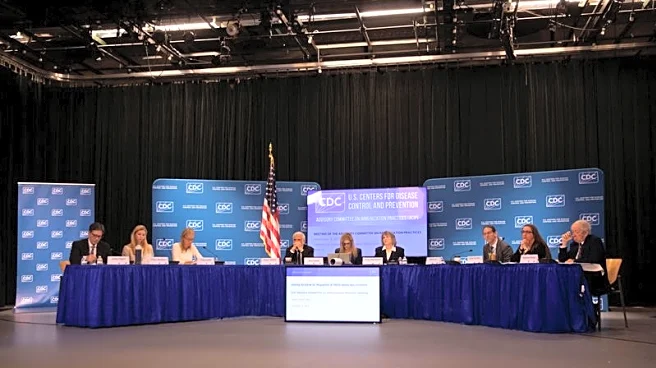
A pivotal meeting of the CDC's Advisory Committee on Immunization Practices (ACIP) is scheduled, where significant changes to the childhood vaccine schedule may be discussed. This includes potential delays in administering the hepatitis B vaccine to newborns, which has raised concerns among public health experts. The outcome of this meeting could influence future vaccine policies and public perception of vaccine safety. The ongoing debate underscores the need for careful consideration of scientific evidence and the potential consequences of policy changes on public health.