








What's Happening?
Group-purchase campaigns in parts of North Carolina and Georgia are offering discounted induction ranges to make switching to electric appliances more accessible. These initiatives, spearheaded by organizations like Let's Go Electric, aim to overcome
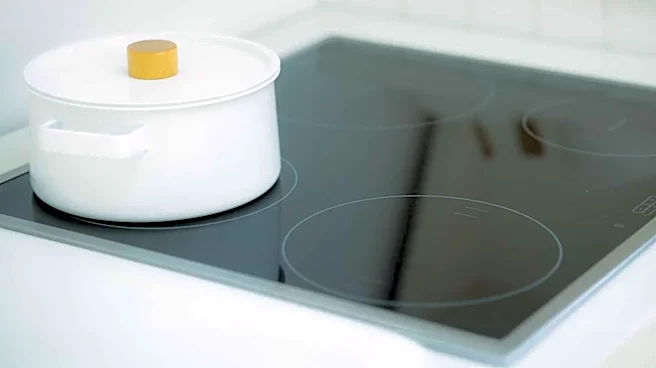
the financial barriers associated with upgrading to induction cooking, particularly the costly electrical renovations often required for 240-volt outlets. The program features a novel induction range designed and manufactured by Electra, a New York City-based company. This appliance incorporates a 5-kilowatt-hour battery, allowing it to operate from a standard 120-volt, three-prong outlet, thus eliminating the need for expensive electrical upgrades. While the Electra range is priced at $3,999, the group-buying effort provides a $300 discount, and participants may also qualify for additional government rebates. Let's Go Electric is running similar campaigns in Electrify Decatur (Atlanta suburb), Electrify Asheville-Buncombe, Electrify the Triad (Winston-Salem and Greensboro), and Electrify the Triangle (Raleigh, Durham, and Chapel Hill).
Why It's Important?
This initiative is significant for U.S. households and the broader energy transition movement. The high upfront cost of electrical upgrades has been a major deterrent for many consumers considering a switch from gas to electric cooking. By offering an induction range that bypasses this expense, the program makes electrification more financially viable for a wider demographic. This directly impacts public health by reducing indoor air pollution associated with gas stoves and contributes to climate change mitigation by decreasing fossil fuel consumption in homes. For the appliance industry, the success of Electra's battery-equipped range could signal a new market demand for innovative solutions that simplify electrification. It also highlights the role of community-based programs and group-buying models in accelerating the adoption of sustainable technologies, potentially influencing public policy and utility programs to support similar initiatives nationwide. Consumers stand to gain from lower energy bills and improved indoor air quality, while the environment benefits from reduced emissions.
What's Next?
The success of these group-buy campaigns in North Carolina and Georgia could serve as a model for other regions across the U.S. If the Electra induction range proves popular and effective, it may encourage other appliance manufacturers to develop similar battery-integrated solutions, further democratizing access to electric cooking. Organizations like Let's Go Electric are likely to expand their reach, bringing these programs to more cities and states. Policymakers and energy agencies will be closely watching the outcomes, as successful electrification initiatives can inform future rebate programs, building codes, and energy efficiency standards. The discount on Electra induction ranges is available through November 30, suggesting a potential surge in purchases before the deadline. Continued consumer education on the benefits of induction cooking and the availability of such programs will be crucial for sustained growth in the electric appliance market.
Beyond the Headlines
The shift towards induction cooking, facilitated by innovations like Electra's battery-equipped range, represents more than just an appliance upgrade; it signifies a broader cultural and technological transition in American homes. The emphasis on reducing indoor air pollutants from gas stoves highlights a growing awareness of the health impacts of household energy choices, potentially leading to a re-evaluation of traditional cooking methods. This movement also touches upon energy independence and resilience, as the battery in the Electra range can power cooking during grid outages, offering a practical benefit in an era of increasing climate-related disruptions. The collaborative model of group-buying campaigns fosters community engagement and collective action towards sustainability, demonstrating how local initiatives can drive national change. This trend could also influence architectural design and home construction, with a greater focus on all-electric homes and infrastructure that supports efficient energy use, ultimately reshaping the domestic landscape and consumer habits.