




What's Happening?
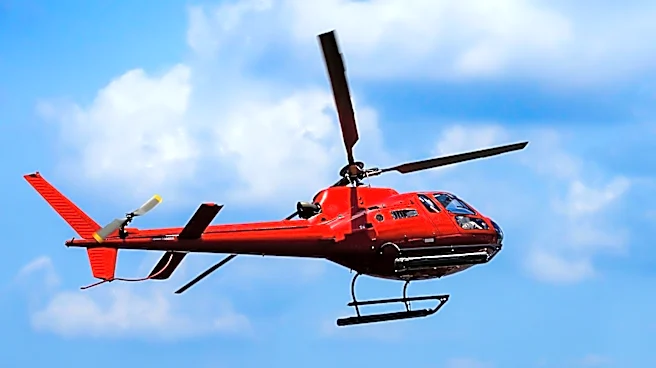
U.S. Representative Ed Case has publicly opposed a petition by Trident Adventures, an Oahu-based helicopter tour company, seeking an exemption from Federal Aviation Administration (FAA) passenger restraint requirements. The company conducts 'helocast'
tours where passengers unbuckle their seatbelts and jump from a hovering helicopter into the ocean. Representative Case stated that granting such an exemption would jeopardize public safety, emphasizing that air travel safety regulations should be uniformly applied regardless of flight altitude or aircraft stability. The FAA subsequently denied Trident Adventures' petition, concluding that the practice posed risks to customers from turbulence, windblast, or human error. This decision effectively closes off a significant part of the company's business model, which was built around these specialized tours. The FAA's ruling follows a separate state enforcement action against Trident, where the Hawaii Board of Land and Natural Resources fined the company $10,000 for unauthorized commercial water drops in a protected marine area.
Why It's Important?
This development underscores the critical balance between commercial innovation and public safety in the aviation industry, particularly in the context of adventure tourism. Representative Case's intervention highlights the role of elected officials in advocating for stringent safety standards, potentially influencing regulatory bodies like the FAA to prioritize public welfare over business interests. The FAA's denial of the exemption sets a precedent for how similar unique tour operations might be regulated in the future, ensuring that novel recreational activities do not compromise established safety protocols. For the tourism industry, especially in Hawaii, this decision could lead to a re-evaluation of high-risk activities and potentially encourage a shift towards more conventional and regulated offerings. It also reinforces the authority of regulatory bodies to enforce safety measures, which is crucial for maintaining public trust in air travel and related services. The incident also brings to light the challenges faced by companies that adapt military-style operations for civilian use, as they must navigate a different set of safety and regulatory expectations.
What's Next?
Trident Adventures now faces a critical juncture regarding its future operations. It remains uncertain whether the company will appeal the FAA's decision or if it will restructure its Oahu offerings to comply with existing regulations, potentially focusing on boat-based diving or FAA-compliant air tours within permitted areas. The FAA's ruling may also prompt broader scrutiny of commercial helicopter activities, particularly in popular tourist destinations like Hawaii, potentially leading to increased oversight or new regulations for similar adventure tourism operators. Other companies offering unique or high-risk tours might proactively review their practices to ensure compliance and avoid similar regulatory challenges. This situation could also spark further discussions among lawmakers and regulatory bodies about the appropriate balance between fostering tourism innovation and upholding strict safety standards for the public.
Beyond the Headlines
The FAA's decision and Representative Case's stance reflect a deeper societal concern regarding the commercialization of activities that originated in specialized military or professional contexts. While helocasting is a technique adapted from U.S. Navy SEAL veterans, its application in civilian tourism raises questions about the transferability of safety protocols and risk assessments. The incident also highlights the tension between economic opportunities presented by unique tourism ventures and the environmental and community impacts, as evidenced by the state fine for unauthorized water drops in a marine conservation district. This case could contribute to a broader dialogue about responsible tourism, the ethical implications of high-risk recreational activities, and the extent to which regulatory bodies should adapt to or restrict innovative business models that push the boundaries of traditional safety frameworks. It also underscores the importance of local community input in shaping regulations that affect their environment and safety.