




What's Happening?
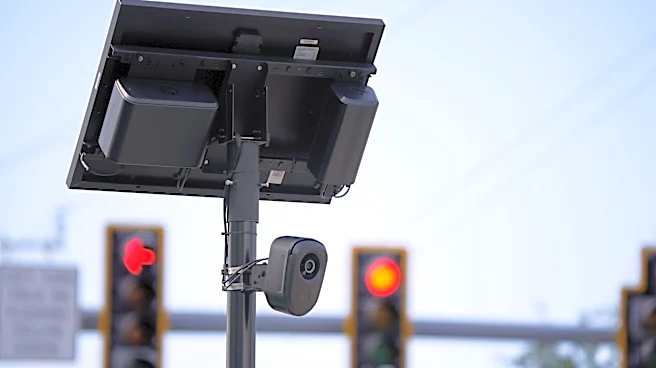
Springfield police officials have stated that a new executive order signed by Missouri Governor Mike Kehoe, which places restrictions on license plate readers, will not alter their current policies or the way they utilize their Flock cameras. Governor Kehoe's
executive order was signed on Wednesday, aiming to regulate the use of these surveillance technologies across the state. However, the Springfield Police Department has indicated that their existing protocols for deploying and managing Flock cameras already align with or exceed the new state-mandated restrictions. This suggests that the department has been operating with a level of internal oversight and policy that anticipates or addresses concerns typically raised about such technology. The announcement clarifies that for Springfield residents, the operational use of license plate readers by local law enforcement will remain consistent with past practices.
Why It's Important?
This development is important because it highlights the ongoing tension between state-level directives and local law enforcement autonomy, particularly concerning surveillance technology. While a state executive order aims to standardize or restrict certain practices, Springfield's police department asserts its current policies are sufficient, indicating a potential divergence in interpretation or existing operational standards. For citizens, this means that despite a statewide effort to regulate license plate readers, the practical application in Springfield will not change. This situation could raise questions about the effectiveness of state-level executive orders if local entities already claim compliance or have more stringent internal policies. It also underscores the varying approaches to privacy and surveillance technology adopted by different jurisdictions within the same state, impacting how residents perceive their data privacy and law enforcement oversight.
What's Next?
Given the Springfield Police Department's stance, it is unlikely that immediate changes will occur in their use of Flock cameras. However, the situation could prompt further scrutiny from civil liberties groups or state legislators regarding the specifics of Springfield's existing policies and how they compare to the spirit and letter of Governor Kehoe's executive order. There might be calls for greater transparency regarding the department's internal guidelines for license plate reader data retention, sharing, and usage. Other municipalities in Missouri might also review their own policies in light of the executive order, potentially leading to a patchwork of regulations across the state. The long-term implications could involve legislative efforts to codify more uniform state laws on surveillance technology, moving beyond executive orders to ensure consistent application and oversight across all local law enforcement agencies.
Beyond the Headlines
The Springfield police's decision to maintain its current policy on license plate readers, despite a new state executive order, touches upon deeper issues of local control versus state oversight and the evolving debate around privacy in the digital age. The widespread deployment of license plate readers, while touted as a tool for public safety and crime solving, also raises significant concerns about mass surveillance, data security, and potential for misuse. This scenario in Springfield underscores the challenge of balancing security needs with individual privacy rights. It also highlights the need for clear, comprehensive, and publicly accessible policies governing such technologies. The lack of change in Springfield's approach, even with a state directive, could signal a broader trend where local agencies, having invested in and developed protocols for these tools, are resistant to external mandates that they perceive as redundant or less effective than their own established practices. This dynamic could fuel further discussions on the appropriate level of government to regulate advanced surveillance technologies.