






What's Happening?
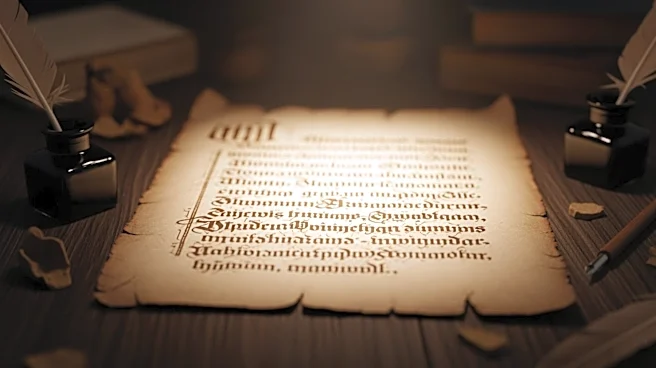
Researchers from Trinity College Dublin have uncovered the oldest surviving English poem, 'Caedmon's Hymn,' within a medieval manuscript in a Roman library. The poem, composed in Old English by a Northumbrian agricultural worker in the 7th century, was
found within the Latin text of the 'Ecclesiastical History of the English People' by the Venerable Bede. This discovery was made by Elisabetta Magnanti and Mark Faulkner, who were examining digitized pages of the manuscript. The manuscript, dating from the 9th century, is one of the oldest copies of Bede's work and contains the poem within its main body, unlike earlier copies where it appeared as an afterthought. The manuscript's journey included being part of the Nonantola abbey's collection, moving to the Vatican, and eventually being acquired by Italy's culture ministry in 1972.
Why It's Important?
The discovery of 'Caedmon's Hymn' in this context is significant as it provides new insights into the early diffusion of the English language and its literary heritage. The poem's presence in a 9th-century manuscript suggests that English was already being valued as a literary language much earlier than previously thought. This finding could reshape understandings of the development of English literature and its historical context. It highlights the importance of international collaboration in uncovering and preserving cultural heritage, as well as the potential for further discoveries in digitized archives.
What's Next?
The manuscript's digitization and availability through the library's website open up opportunities for further research and discoveries. Scholars worldwide can now access this and other rare texts, potentially leading to new insights in various fields. The library's ongoing project to digitize rare books and manuscripts aims to facilitate international cooperation and scholarly research, paving the way for future discoveries.
Beyond the Headlines
This discovery underscores the importance of preserving and studying historical texts, as they can offer unexpected insights into cultural and linguistic history. The manuscript's complex provenance, involving multiple relocations and ownership changes, highlights the challenges and importance of tracking and maintaining historical artifacts. The digitization efforts by libraries play a crucial role in making such treasures accessible to a global audience, ensuring that they are not lost to time.