

What's Happening?
King penguins on Possession Island are experiencing increased chick survival rates due to longer summers associated with rising temperatures in the sub-Antarctic. Research by Gaël Bardon and colleagues at the Monaco Scientific Center indicates that the breeding
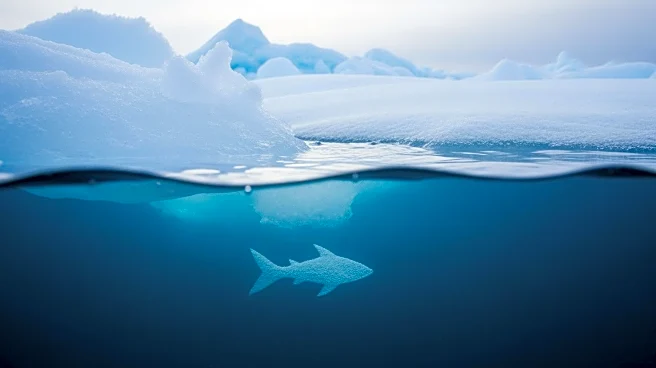
season for these penguins has extended, allowing more chicks to mature. The penguins' primary food source, lanternfish, is currently abundant due to warmer waters, which has contributed to the improved survival rates. However, the penguins' main fishing area, the polar front, is shifting further south, raising concerns about future food accessibility. This shift could eventually lead to a decline in the penguin population if the trend continues.
Why It's Important?
The thriving of king penguins in a warmer climate highlights the complex impacts of climate change on wildlife. While the current conditions benefit the penguins, the long-term sustainability of their population is at risk if their food sources become inaccessible. This situation underscores the broader ecological challenges posed by climate change, as species must adapt to rapidly changing environments. The potential decline of king penguins could have cascading effects on the Southern Ocean's ecosystem, where they play a crucial role. The study serves as a reminder of the delicate balance in natural habitats and the unforeseen consequences of climate shifts.
What's Next?
Researchers are closely monitoring the king penguin populations to assess the long-term impacts of climate change on their survival. If the polar front continues to move south, the penguins may need to adapt by finding new food sources or relocating to other islands. Conservationists and scientists are likely to focus on strategies to mitigate the effects of climate change on these and other vulnerable species. The situation calls for increased attention to climate policies and conservation efforts to preserve biodiversity in the face of environmental changes.