
What's Happening?
A recent study published in Nature investigates the relationship between cerebral vasomotion and neurovascular coupling in rats. The research, conducted under the Animal (Scientific Procedures) Act 1986,
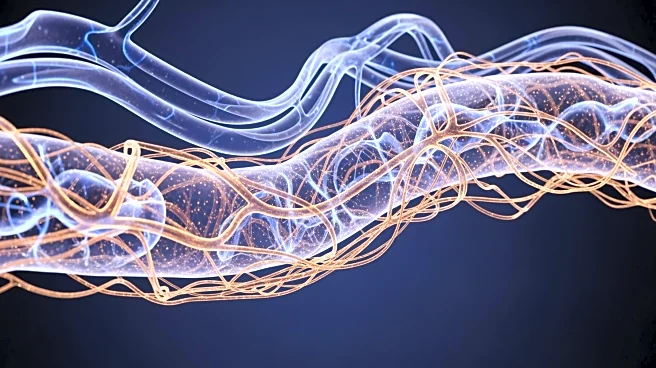
involved 18 female Hooded Lister rats. The study aimed to dissociate cerebral vasomotion from low-frequency spontaneous neurovascular coupling. Researchers used two-dimensional optical imaging spectroscopy (2D-OIS) to measure cortical hemodynamic changes, offering advantages over traditional BOLD fMRI. The study involved surgical procedures, including tracheotomy and cannulation, to monitor physiological parameters such as mean arterial blood pressure and blood gas levels. The research focused on the effects of phenylephrine infusion on baseline neurovascular relationships, observing changes in cerebral vasomotion and its impact on neurovascular coupling.
Why It's Important?
This study is significant as it enhances the understanding of neurovascular coupling, a critical aspect of brain function that links neural activity with blood flow. By exploring the dissociation of cerebral vasomotion from neurovascular coupling, the research provides insights into the mechanisms underlying brain hemodynamics. This knowledge is crucial for developing better diagnostic and therapeutic strategies for neurological disorders where neurovascular coupling is disrupted. The findings could influence future research directions in neuroscience, particularly in understanding how cerebral blood flow is regulated and its implications for brain health.
What's Next?
The study's findings may lead to further research exploring the implications of cerebral vasomotion on neurovascular health. Future studies could investigate the potential for targeting vasomotion in therapeutic interventions for neurological conditions. Additionally, the methodology used in this research could be applied to other studies aiming to understand the complex interactions between neural activity and cerebral blood flow. Researchers may also explore the translational potential of these findings in human studies, potentially impacting clinical practices related to brain health and disease management.
Beyond the Headlines
The research highlights the ethical considerations involved in animal studies, emphasizing adherence to regulatory standards. It also underscores the importance of advanced imaging techniques in neuroscience research, which can provide more detailed insights into brain function. The study's approach to dissociating cerebral vasomotion from neurovascular coupling could pave the way for new paradigms in understanding brain physiology, with potential long-term impacts on how neurological diseases are studied and treated.