



What's Happening?
Thousands of tourists have been stranded in northern Finland due to extreme cold weather conditions. Flights at Kittilä airport were canceled as temperatures plummeted to minus 34.6 degrees Fahrenheit, making de-icing of aircraft and other operations
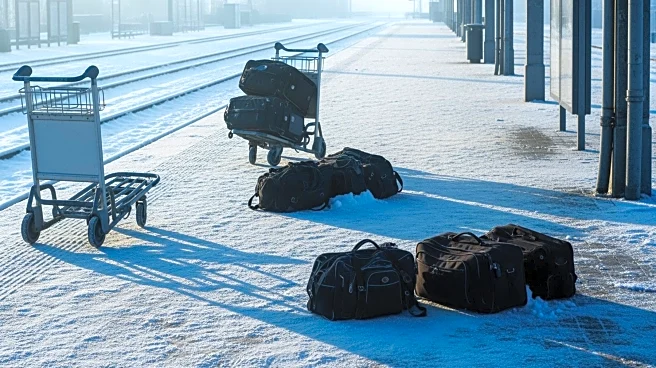
challenging. The Finnish Meteorological Institute forecasts that the deep freeze will persist, with temperatures expected to drop to nearly minus 40 F. This severe cold snap has affected large areas of northern, central, and eastern Europe, causing significant travel disruptions. In Germany, train services in the north were halted due to heavy snowfall, while in the Baltic countries, authorities have advised against nonessential travel due to blizzard conditions.
Why It's Important?
The extreme weather conditions in Finland and across Europe highlight the vulnerability of transportation infrastructure to severe cold and snow. The disruption of flights and train services not only affects tourism but also has broader economic implications, potentially impacting supply chains and local economies reliant on winter tourism. The situation underscores the need for robust contingency planning and infrastructure capable of withstanding extreme weather events, which are becoming more frequent due to climate change. The travel disruptions also emphasize the importance of international cooperation in managing cross-border weather-related challenges.
What's Next?
As the cold weather persists, authorities in affected regions are likely to continue implementing measures to ensure public safety, such as school closures and travel advisories. Airlines and rail operators will need to manage the backlog of stranded passengers and reschedule services as conditions improve. The ongoing situation may prompt discussions on improving infrastructure resilience and emergency response strategies to better handle similar events in the future.