






What's Happening?
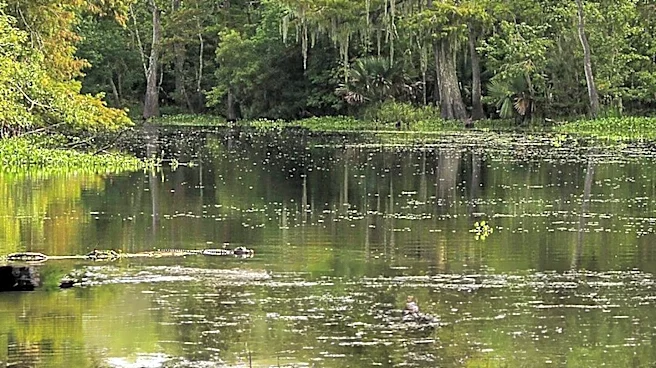
The Okefenokee Swamp, a vast wilderness spanning southeastern Georgia and extending into Florida, is a thriving ecosystem characterized by dark waters, diverse plant life, and a significant population of American alligators and venomous snakes. The swamp,
whose name means 'land of bubbling water' or 'land of trembling earth' in its original Native American description, covers 1740 sq km of waterways, prairies, and swamp forest. It features unique adaptations among its flora, such as flesh-eating pitcher plants that attract carrion flies with a scent of rotting flesh, and sundews with sticky tentacles to trap insects. The water's dark, tea-like appearance is due to tannins from deep peat deposits, which also generate methane, forming floating islands colonized by plants. Despite historical attempts to drain it, extensive logging in the early 20th century, and massive wildfires, the swamp has demonstrated remarkable resilience and regeneration, with fire even playing a role in its natural cycle.
Why It's Important?
The Okefenokee Swamp represents one of the United States' last great wildernesses, offering critical insights into natural ecosystem resilience and biodiversity. Its unique plant adaptations, such as carnivorous plants, highlight evolutionary strategies for nutrient acquisition in challenging environments. The swamp's ability to recover from significant human intervention and natural disasters, including extensive logging and wildfires, underscores the importance of conservation efforts and understanding natural ecological processes. The presence of a large alligator population and various venomous snakes also emphasizes the need for careful management of human interaction with such wild spaces. Furthermore, the swamp's historical and ecological significance provides valuable data for climate change studies, particularly concerning the impact of drought and fire on wetland ecosystems and their capacity for regeneration.
What's Next?
Conservation efforts will likely continue to focus on protecting the Okefenokee Swamp from modern threats, including potential climate change impacts that could lead to more frequent or severe fires. Monitoring the swamp's ecological health, including its diverse plant and animal populations, will be crucial for maintaining its status as a vital wilderness area. Research into the unique adaptations of its flora and fauna, as well as its hydrological and geological processes, will continue to inform environmental management strategies. Public awareness campaigns may also be necessary to educate visitors about the swamp's delicate ecosystem and the dangers posed by its wildlife, ensuring responsible tourism and minimizing human impact on this significant natural habitat.
Beyond the Headlines
The Okefenokee Swamp's enduring existence, despite centuries of natural and human-induced challenges, offers a profound narrative on the resilience of nature. Its 'flesh-eating' plants, while a fascinating biological adaptation, also serve as a stark reminder of the intricate and often harsh realities of survival in nutrient-poor environments. The swamp's history, from Native American habitation to logging and its eventual designation as a wildlife reserve, reflects evolving human perceptions of wilderness—from a resource to be exploited to a treasure to be preserved. This ongoing dynamic between human activity and natural ecosystems highlights broader ethical considerations regarding land use, conservation, and the long-term stewardship of unique natural heritage sites in the U.S.