
What's Happening?
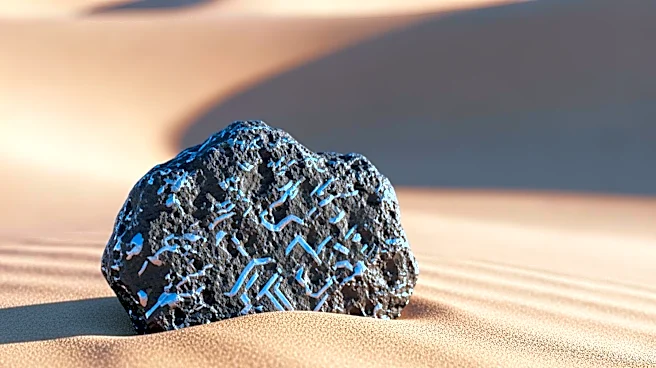
A rare meteorite, known as Northwest Africa (NWA) 12774, was discovered in the Sahara Desert in 2019. This meteorite is classified as an angrite, one of the oldest volcanic rocks in the solar system. Researchers
have found that it contains a unique chemical signature, suggesting that some of the solar system's earliest worlds developed differently from other rocky planets. The study, led by Aaron Bell from the University of Colorado Boulder, indicates that the parent body of this meteorite was much larger than previously thought, possibly rivaling the moon in size. The meteorite's composition and the pressure conditions under which it formed suggest it originated from a large celestial body, rather than a small asteroid.
Why It's Important?
The discovery of NWA 12774 provides valuable insights into the early formation and evolution of planets in the solar system. It challenges existing assumptions about the size and nature of early planetary bodies, suggesting that there were once large worlds that have since been lost. This finding could reshape our understanding of planetary formation and the history of the solar system. The study highlights the importance of meteorites in uncovering the mysteries of space and may lead to further investigations into other meteorites that could hold similar secrets.
What's Next?
Researchers may continue to study NWA 12774 and other angrites to gather more information about the conditions and processes that shaped early planetary bodies. There is potential for discovering more evidence of lost worlds in meteorites that have not been thoroughly examined. This could lead to new theories about the solar system's history and the formation of planets.
Beyond the Headlines
The study of NWA 12774 opens up discussions about the possibility of other large celestial bodies that existed in the early solar system but were destroyed or absorbed into other planets. This raises questions about the dynamic and violent nature of the solar system's formation and the role of collisions in shaping planetary bodies.