



What's Happening?
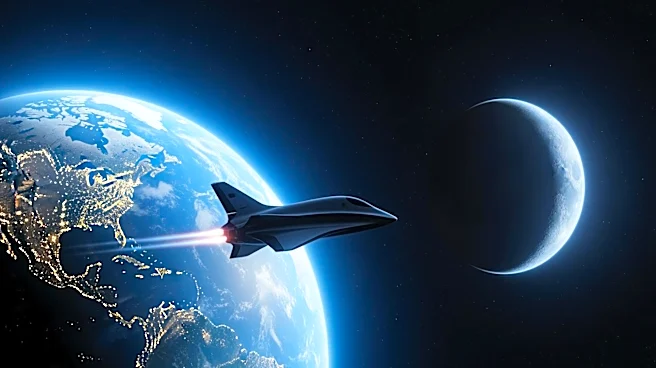
The Artemis II mission, carrying NASA astronauts Reid Wiseman, Victor Glover, Christina Koch, and Canadian astronaut Jeremy Hansen, is set to perform a lunar flyby, marking the first human mission to the Moon since Apollo 17 in 1972. The crew entered
the lunar sphere of influence, where the Moon's gravity overtakes Earth's, and is preparing for a close approach to the Moon's far side. This mission will break the record for the farthest distance traveled from Earth by humans, previously set by Apollo 13. The crew will conduct detailed observations of the lunar surface and experience a solar eclipse from space.
Why It's Important?
The Artemis II mission is a significant step in NASA's efforts to return humans to the Moon and eventually conduct missions to Mars. By breaking the distance record set by Apollo 13, the mission demonstrates advancements in space travel technology and human exploration capabilities. The mission's success could pave the way for future lunar and interplanetary missions, contributing to scientific knowledge and inspiring global interest in space exploration. The involvement of international astronauts also highlights the collaborative nature of modern space missions.
What's Next?
Following the lunar flyby, the Artemis II crew will begin their return journey to Earth, with a scheduled splashdown off the coast of San Diego. NASA will analyze the data and imagery collected during the mission to inform future Artemis missions, including the planned Artemis III mission, which aims to land humans on the lunar surface. The success of Artemis II will be crucial in maintaining momentum for NASA's long-term goals of lunar and Martian exploration.