

What's Happening?
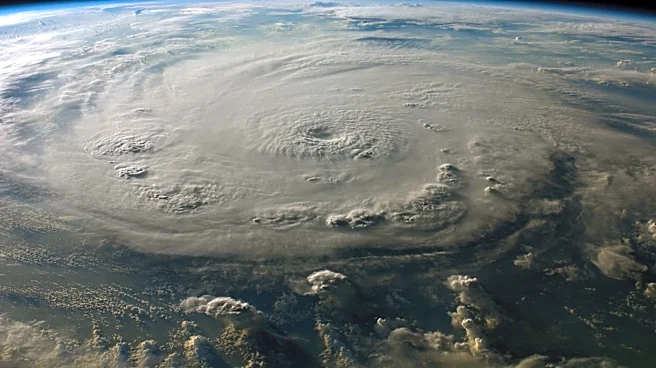
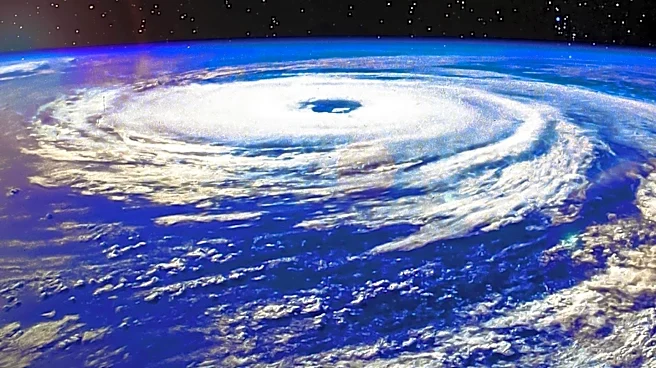
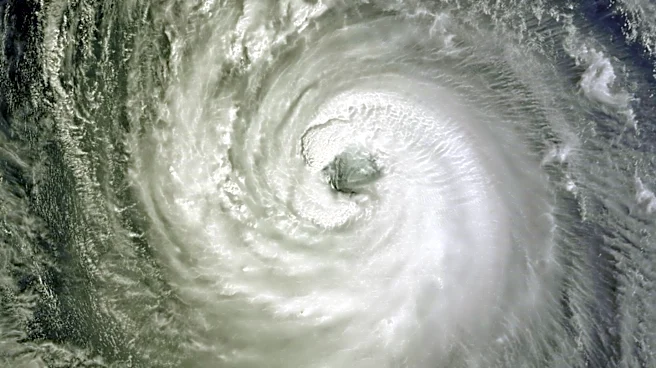
Cyclones, hurricanes, and typhoons, despite their different names, are the same meteorological phenomenon driven by warm water and air currents. These powerful storms are unable to cross the equator due to the Coriolis effect, a force caused by the Earth's
rotation. This effect dictates the direction of the storm's rotation, which is essential for its formation and sustenance. In the Northern Hemisphere, cyclones rotate counterclockwise, while in the Southern Hemisphere, they rotate clockwise. At the equator, the Coriolis effect is null, preventing the formation of cyclones and acting as a natural barrier. This phenomenon ensures that cyclones cannot transition from one hemisphere to another, maintaining the equator as a permanent zone of calm.
Why It's Important?
The inability of cyclones to cross the equator has significant implications for global weather patterns and safety. This natural barrier protects equatorial regions from the devastating impacts of cyclones, which can cause widespread destruction and loss of life. Understanding the Coriolis effect and its role in cyclone formation is crucial for meteorologists and climate scientists as they work to predict and mitigate the impacts of these storms. Additionally, this knowledge helps in planning and preparing for cyclones in regions where they are more likely to occur, potentially saving lives and reducing economic losses.