


What's Happening?
The Dominican Republic and the United States have formalized a Framework Cooperation Agreement aimed at enhancing the security and resilience of supply chains for critical minerals and rare earth elements. The agreement, signed by Dominican Foreign Minister
Víctor “Ito” Bisonó and U.S. Ambassador Leah F. Campos, seeks to foster new investment and development opportunities in the extraction and processing of these strategic resources. Energy and Mines Minister Joel Santos Echavarría also attended the signing ceremony. This pact is designed to facilitate joint identification of projects, protect respective markets, and streamline financing for initiatives in both nations. Ambassador Campos emphasized that the agreement extends beyond minerals, encompassing sovereignty, security, and shared prosperity, ensuring that future material extraction and manufacturing are conducted collaboratively between trusted partners.
Why It's Important?
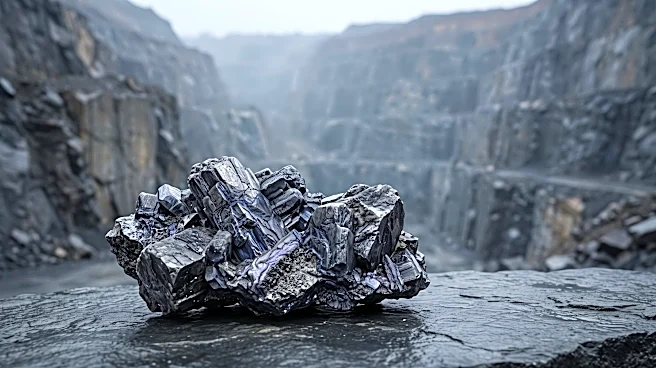
This agreement is significant for the U.S. as it diversifies and secures access to critical minerals and rare earth elements, which are essential for advanced technologies ranging from electronics to renewable energy systems and defense applications. By partnering with the Dominican Republic, the U.S. aims to reduce its reliance on potentially unstable or monopolistic supply sources, thereby strengthening its economic and national security. For the Dominican Republic, the cooperation promises increased foreign investment, technological transfer, and the development of its mining sector, potentially creating jobs and economic growth. The framework aligns with broader U.S. foreign policy objectives to build resilient supply chains with allied nations, mitigating risks associated with geopolitical tensions and market volatility in the global mineral trade.
What's Next?
Following the signing, both nations are expected to begin identifying specific projects of mutual interest related to critical mineral exploration, extraction, processing, and refining. This will likely involve technical exchanges, feasibility studies, and discussions on investment mechanisms. The agreement, while a political and programmatic action plan, does not create legally binding obligations, suggesting that subsequent, more detailed agreements or investment contracts will be necessary to implement specific initiatives. Stakeholders, including mining companies, technology firms, and financial institutions in both countries, will likely explore opportunities arising from this cooperation. The U.S. has signed similar frameworks with 27 other countries, indicating a broader strategy to secure critical mineral supply chains globally.
Beyond the Headlines
The cooperation agreement underscores a growing global trend where nations are prioritizing resource security as a key component of national security and economic resilience. Beyond the immediate economic benefits, this partnership could foster deeper diplomatic ties between the U.S. and the Dominican Republic, positioning the latter as a more strategic partner in the Caribbean region. It also highlights the ethical and environmental considerations inherent in critical mineral extraction; future projects will likely face scrutiny regarding sustainable mining practices, labor standards, and environmental impact assessments. The emphasis on 'trusted partners' also signals a geopolitical realignment in resource acquisition, moving away from reliance on adversaries and towards a network of allies to build more secure and ethical supply chains for the technologies of the future.