









What's Happening?
The Pennsylvania House Energy Committee has advanced three bills aimed at mitigating rising electricity costs for consumers, which have seen increases of up to 20% over two years. These increases are attributed to forecasted growth in demand, particularly
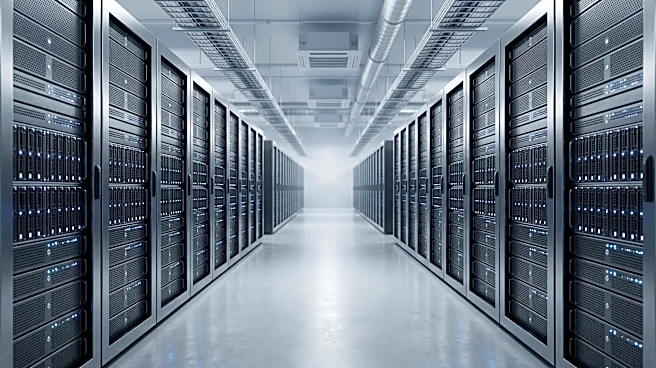
from data centers. Data centers, large facilities housing thousands of computers for AI, streaming, and e-commerce, can consume as much power as a small city. One key bill, House Bill 2828, introduced by Chairperson Elizabeth Fiedler (D-Philadelphia), seeks to mandate that data center builders bear the additional costs utilities incur to upgrade infrastructure to serve them, rather than passing these costs to residents. This bill would require electric utilities to adopt a model rate structure from the Pennsylvania Public Utility Commission that assigns infrastructure costs to large electricity consumers. It also mandates that data centers curtail electricity use during peak demand periods unless they have sufficient backup power, with backup generators required to meet federal emission standards. Another bill, House Bill 2755, sponsored by State Rep. Chris Pielli (D-Chester), would require investor-owned electric transmission companies to be members of a regional transmission organization (RTO), specifically PJM Interconnection in Pennsylvania. This aims to eliminate a 0.5% profit bonus paid by customers that federal regulators allow to incentivize RTO membership. Finally, House Bill 2775, co-sponsored by Rep. Kyle Donahue (D-Lackawanna) and Fiedler, would require data center developers to apply for electric service and pay associated fees before seeking zoning approval, distinguishing serious projects from speculative ones.
Why It's Important?
These legislative efforts are crucial for Pennsylvania residents facing significant increases in their electricity bills, directly impacting household budgets and potentially leading to difficult financial choices, especially during winter months. By shifting the cost burden of new infrastructure to data centers, the proposed legislation aims to protect residential consumers from subsidizing the energy demands of these large-scale operations. The requirement for data centers to curtail electricity use during peak demand periods is vital for maintaining grid stability and preventing price spikes for all consumers. The move to mandate RTO membership for investor-owned electric transmission companies could result in substantial savings for ratepayers, as seen in other states like New Jersey, where eliminating a similar profit bonus saved ratepayers approximately $20 million annually. Furthermore, the bill addressing speculative data center developments is important for local municipalities, which are currently overwhelmed by land use applications for projects that may not materialize, streamlining the development process and ensuring resources are allocated efficiently. These measures collectively seek to balance economic development with consumer protection and grid reliability in the face of rapidly growing energy demands from the tech sector.
What's Next?
The advanced bills now face further consideration in the Pennsylvania House and Senate, with proponents hoping for passage within the remaining eight voting days of the session. If passed, House Bill 2828 would codify the principle of data centers paying for their infrastructure costs into state law, potentially influencing how utilities plan and charge for service to large industrial consumers. The Pennsylvania Public Utility Commission would then need to implement the model rate structure. For House Bill 2755, if it becomes law, the Pennsylvania Public Utility Commission would need to file a complaint with the Federal Energy Regulatory Commission to end the 0.5% profit bonus for RTO membership, potentially setting a precedent for other states. House Bill 2775 will undergo amendments to address concerns from the Pennsylvania State Association of Township Supervisors before a vote on the House floor. Additionally, the committee passed resolutions directing the Joint State Government Commission to study how heat from data centers can be repurposed and the Legislative Budget and Finance Committee to examine the environmental, fiscal, and local government aspects of data center decommissioning. These studies could inform future policy decisions regarding data center operations and their broader impact.
Beyond the Headlines
The legislative actions in Pennsylvania highlight a growing national challenge: how to manage the immense energy demands of the burgeoning data center industry without disproportionately burdening residential electricity consumers. The debate over who should bear the costs of infrastructure upgrades and increased energy consumption raises fundamental questions about equitable energy policy and the social responsibility of large corporations. The proposals also touch upon the broader implications of technological advancement, specifically artificial intelligence and streaming services, on traditional infrastructure and public utilities. The emphasis on curtailing electricity use during peak demand and ensuring backup generators meet emission standards reflects a push towards greater energy efficiency and environmental accountability within the tech sector. This legislative package could serve as a model for other states grappling with similar issues, potentially influencing national discussions on energy regulation, infrastructure investment, and the integration of high-demand industries into existing utility grids. The long-term shifts could include a re-evaluation of utility rate structures nationwide and increased scrutiny on the environmental footprint of data centers.