



What's Happening?
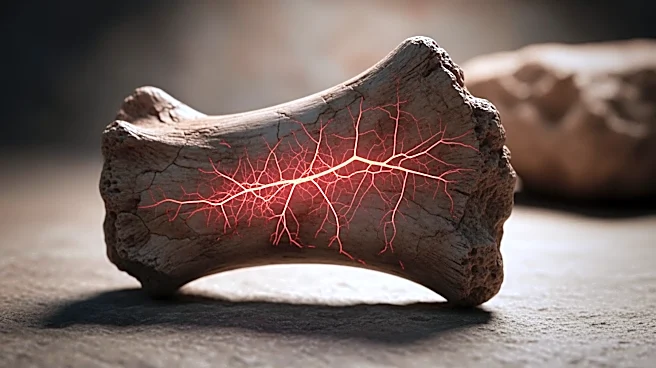
Scientists have uncovered a network of preserved blood vessels inside a fractured rib of a Tyrannosaurus rex, known as Scotty, housed at the Royal Saskatchewan Museum in Canada. The structures, mineralized over 66 million years, suggest a biological response
to a bone injury that was healing at the time of the dinosaur's death. The research, published in Scientific Reports, indicates that the heightened vascular activity due to the injury may have created conditions favorable for preservation. Using synchrotron micro-computed tomography, researchers examined the fossil's interior, revealing tubular structures indicative of angiogenesis, a process where new blood vessels form to support tissue repair. Chemical analysis identified these as iron-rich permineralized casts, filled with iron minerals during fossilization.
Why It's Important?
This discovery challenges previous assumptions about the preservation of microscopic biological details in fossilized bones, suggesting that under certain conditions, such details can survive geological time. The findings could revolutionize paleontological research by highlighting the potential of pathological bones, particularly those with fractures, as promising targets for soft tissue studies. This could lead to a better understanding of the biology and evolution of dinosaurs and their living relatives, such as birds and crocodilians. The research also underscores the importance of advanced imaging techniques like synchrotron micro-computed tomography in uncovering hidden details within fossils, potentially opening new avenues for studying ancient life forms.
What's Next?
The research team plans to expand their study to include comparative analysis of vessel structures in other dinosaur species and living relatives. By using similar synchrotron techniques, they aim to assess how vascular anatomy has evolved across different taxa and geological periods. This could provide further insights into the evolutionary biology of dinosaurs and their descendants, enhancing our understanding of how these ancient creatures adapted to their environments. The study also suggests that future fossil excavations might focus more on pathological specimens to uncover additional biological details.
Beyond the Headlines
The study highlights the complex interplay of geological and biological processes in fossil preservation. The dual-generation mineralization observed in Scotty's rib suggests that fluctuating burial conditions over time can significantly influence the preservation of biological structures. This layered chemistry may also explain the co-preservation of plant fossils at the same site, despite typically requiring different chemical environments. Such findings could inform future fossil excavation and preservation strategies, emphasizing the need to consider the geological history of fossil sites.