






What's Happening?
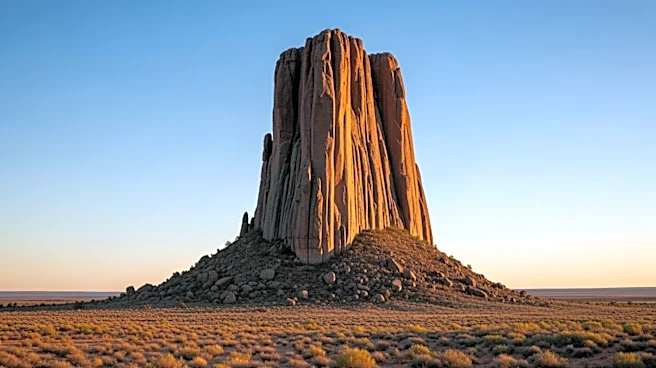
Wyoming's Devils Tower, a striking 867-foot-tall geological formation, is both a spiritual site for Native Americans and the United States' first national monument, designated in 1906. Its cultural significance was further cemented by its appearance in Steven
Spielberg's 1977 film 'Close Encounters of the Third Kind.' The tower, formed by cooling magma, continues to captivate visitors with its majestic presence. CNN recently visited the site to explore its historical and cultural impact.
Why It's Important?
Devils Tower serves as a symbol of the intersection between natural history and cultural heritage. Its designation as a national monument underscores the importance of preserving natural landmarks for their historical and cultural value. The site's role in popular culture, particularly through film, has enhanced its visibility and appeal, drawing tourists and contributing to the local economy. This highlights the broader impact of media on tourism and cultural preservation.
What's Next?
As interest in natural and cultural landmarks grows, Devils Tower may see increased visitation, prompting discussions about sustainable tourism and conservation efforts. The site's management may need to balance visitor access with the preservation of its natural and cultural integrity. Additionally, the ongoing dialogue about the representation of Native American heritage in national monuments could influence future policies and educational initiatives at the site.
Beyond the Headlines
The story of Devils Tower reflects broader themes of cultural appropriation and representation in media. Its portrayal in film and popular culture raises questions about the depiction of indigenous sites and the narratives that are shared with the public. This could lead to increased awareness and sensitivity towards the cultural significance of such landmarks, fostering a more inclusive approach to storytelling and heritage preservation.